Jian Bian | Rechargeable & Cordless Lighting Manufacturer

Category: Design Stories

Narrative JIANBIAN lighting concepts, placement guidance, and sample-development notes for design and hospitality buyers.

  • Petal Disc and the Conversation That Did Not Need a Screen

    Petal Disc and the Conversation That Did Not Need a Screen

    JIANBIAN DESIGN STORY · CONCEPT 02 OF 10

    The most memorable rooms do not ask people to perform. Petal Disc lowers the visual volume so two people can hear what is actually being said.
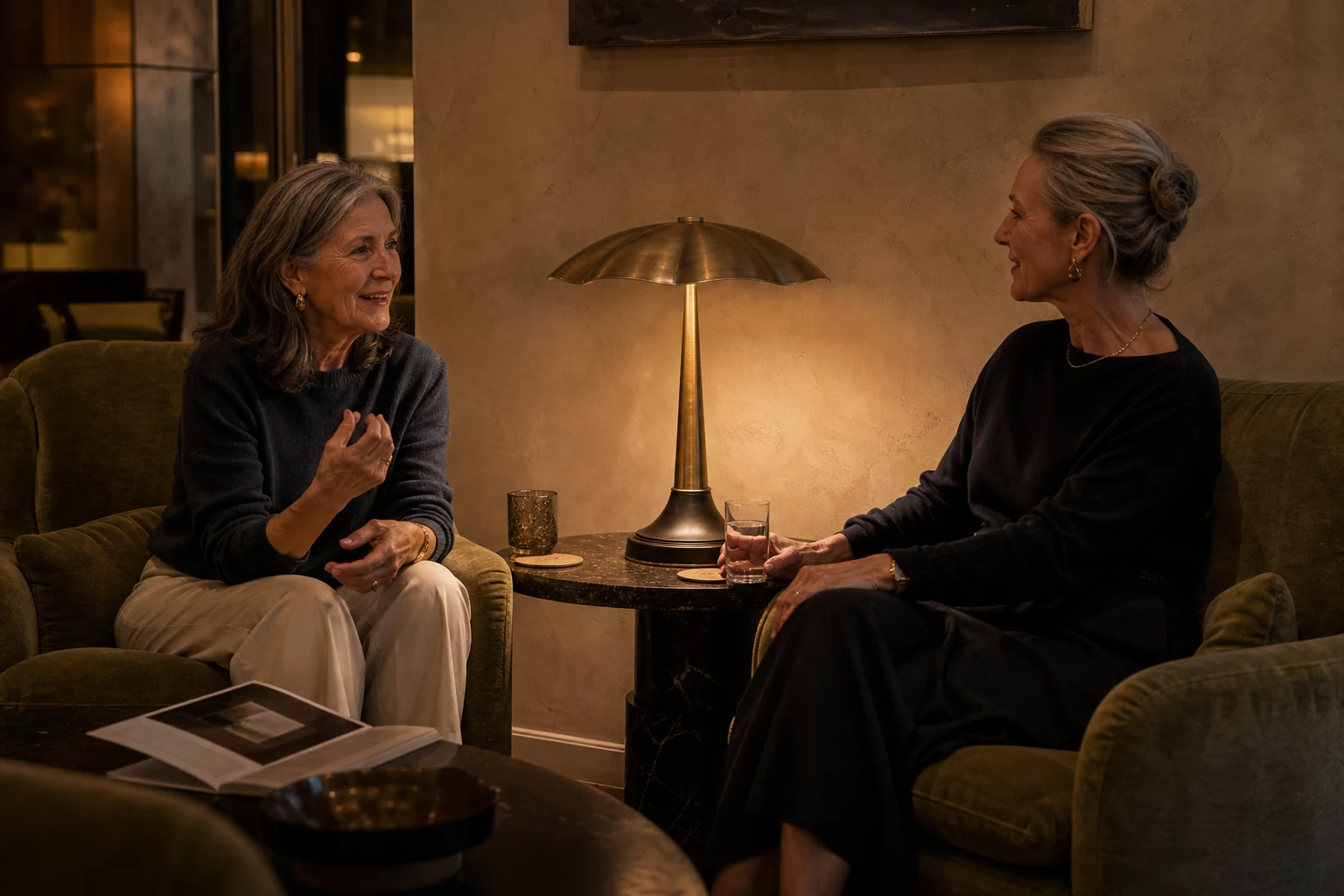
    Two older friends in conversation beside the illuminated Petal Disc brass lounge table lamp
    Petal Disc in the human moment it was designed to support. Concept visualization; not a photograph of a completed installation.

    The moment we designed for

    Two friends have already finished their drinks, but neither reaches for a coat. One story opens into another. Their phones stay face down because the room has given them something rarer than stimulation: permission to remain.

    Petal Disc is designed for this kind of social gravity. Its folded canopy feels almost like a flower held open, directing attention inward without enclosing the people around it. The light is present on the table, but the object leaves faces and gestures free to carry the scene.

    The underlying need is not decorative novelty. It is closeness without pressure—the feeling that a conversation can continue for as long as it needs.

    Why the form feels different

    Most dome lamps resolve into a single smooth curve. Petal Disc introduces shallow folds, so the edge catches light in alternating planes. The result is recognizable from across a lounge but remains quieter than a heavily ornamented shade.

    The dark stepped base gives the soft upper form a point of resistance. That tension—petal above, plinth below—keeps the design from becoming either overly delicate or conventionally masculine.
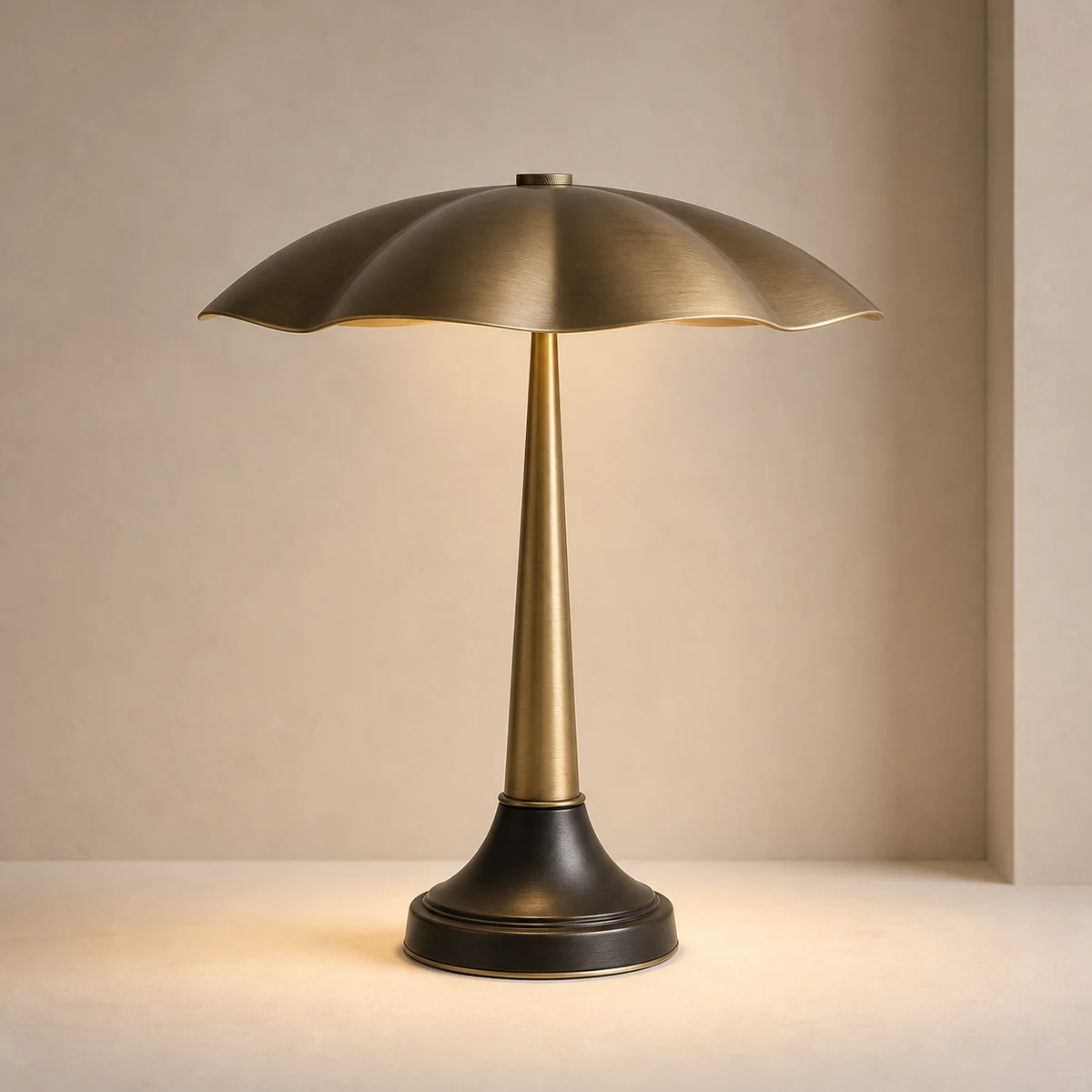
    Petal Disc sculptural table lamp concept with a folded petal canopy and dark stepped base
    Petal Disc product concept. Final construction, dimensions, optical performance, and finish are subject to sampling.

    How to place it

    Use Petal Disc on a low table between lounge chairs, on a console behind a sofa, or in a hotel arrival area where guests naturally slow down. The canopy should not block the eye line of seated people. In clusters, allow enough distance for each lamp to create its own island of attention.

    Pair it with matte upholstery, dark timber, and one or two reflective accents. Avoid filling the table with tall objects; the lamp's folded edge should remain legible from multiple approaches.

    A buyer's guide to the first sample

    A successful sample depends on edge control. Review how the petal folds meet, whether the underside reads evenly, and how the finish behaves across the changing planes. The light source and diffuser should be selected after the intended seated eye line is known.

    Rechargeable or wired construction, output, color temperature, controls, dimensions, finish system, safety requirements, and packaging are open development decisions. They should follow the destination market and project use rather than be inferred from the visualization.

    The promise is not that this concept is already resolved. The promise is that the reason for the design is clear enough to guide every decision that follows.

    Questions buyers ask

    Is Petal Disc intended as the main light in a room?

    No. The concept is strongest as a localized ambient layer that supports conversation and visual orientation.

    Can the shade be produced in different finishes?

    A finish family can be developed, subject to material tests and approval of physical samples on the folded geometry.

    What matters most when reviewing the sample?

    Canopy edge quality, glare at seated eye level, finish consistency across folds, stability, controls, and the illuminated underside.

    What information starts development?

    Share the market, setting, quantity, required date, preferred finish, power method, dimming expectation, and packaging route.

    Continue the series with the previous design story or the next design story. Browse more JIANBIAN buyer guides and design stories.

    Develop this direction with JIANBIAN

    Share the destination market, project type, quantity, required date, preferred finish, wired or rechargeable direction, control method, and packaging channel. We will confirm the specification questions and a practical sampling route.
  • Eclipse Twin and the Dinner No One Wanted to End

    Eclipse Twin and the Dinner No One Wanted to End

    JIANBIAN DESIGN STORY · CONCEPT 03 OF 10

    Plates are empty and the useful part of dinner is over. Eclipse Twin is for the part that follows—the stories people tell only when nobody is rushing away.

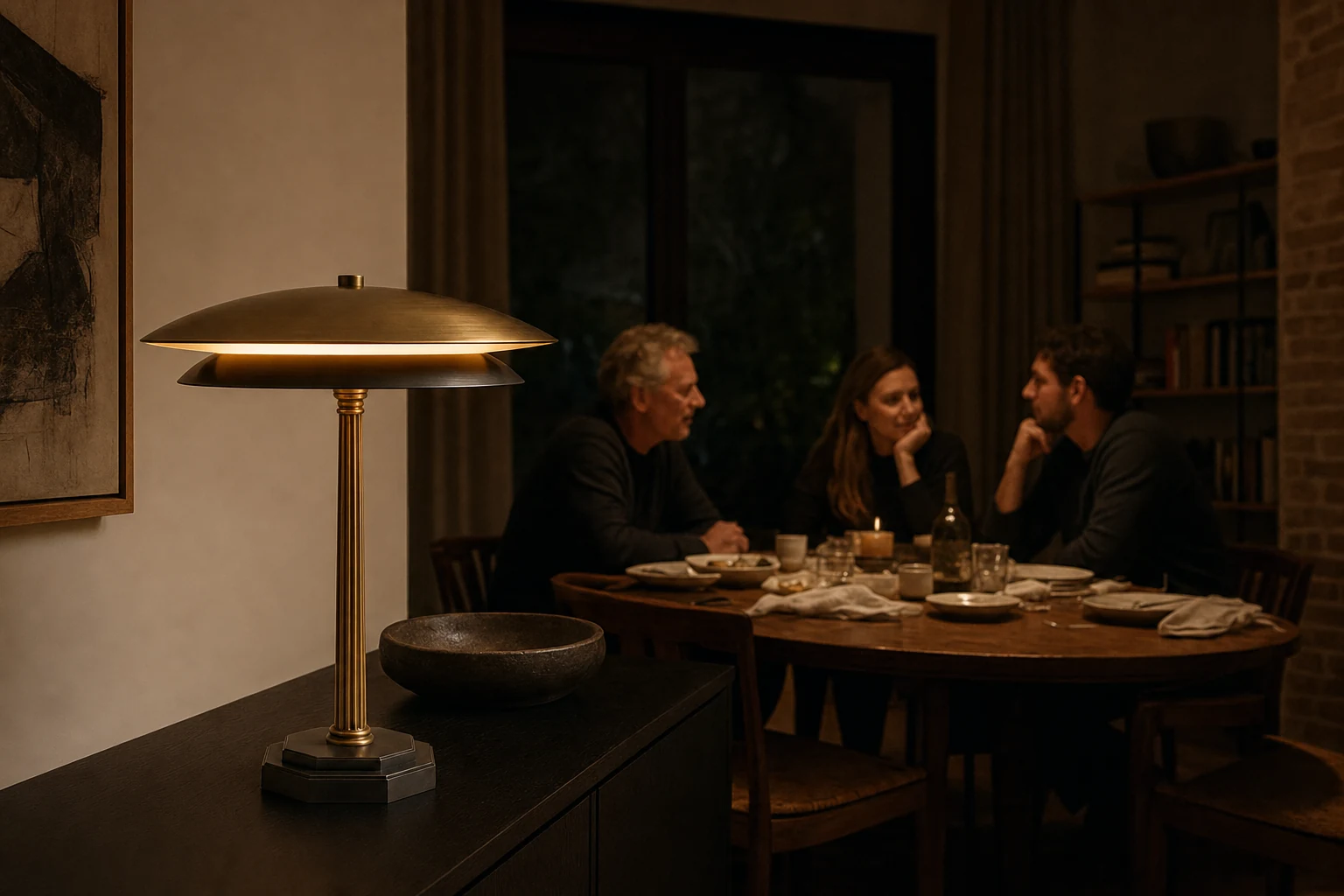
    Family lingering after dinner with the illuminated Eclipse Twin layered brass table lamp in the foreground
    Eclipse Twin in the human moment it was designed to support. Concept visualization; not a photograph of a completed installation.

    The moment we designed for

    The plates have been pushed aside. Someone repeats the best line from the story and everybody laughs again. This is the interval restaurants try to create and homes remember: the meal is finished, yet the table still has a hold on the people around it.

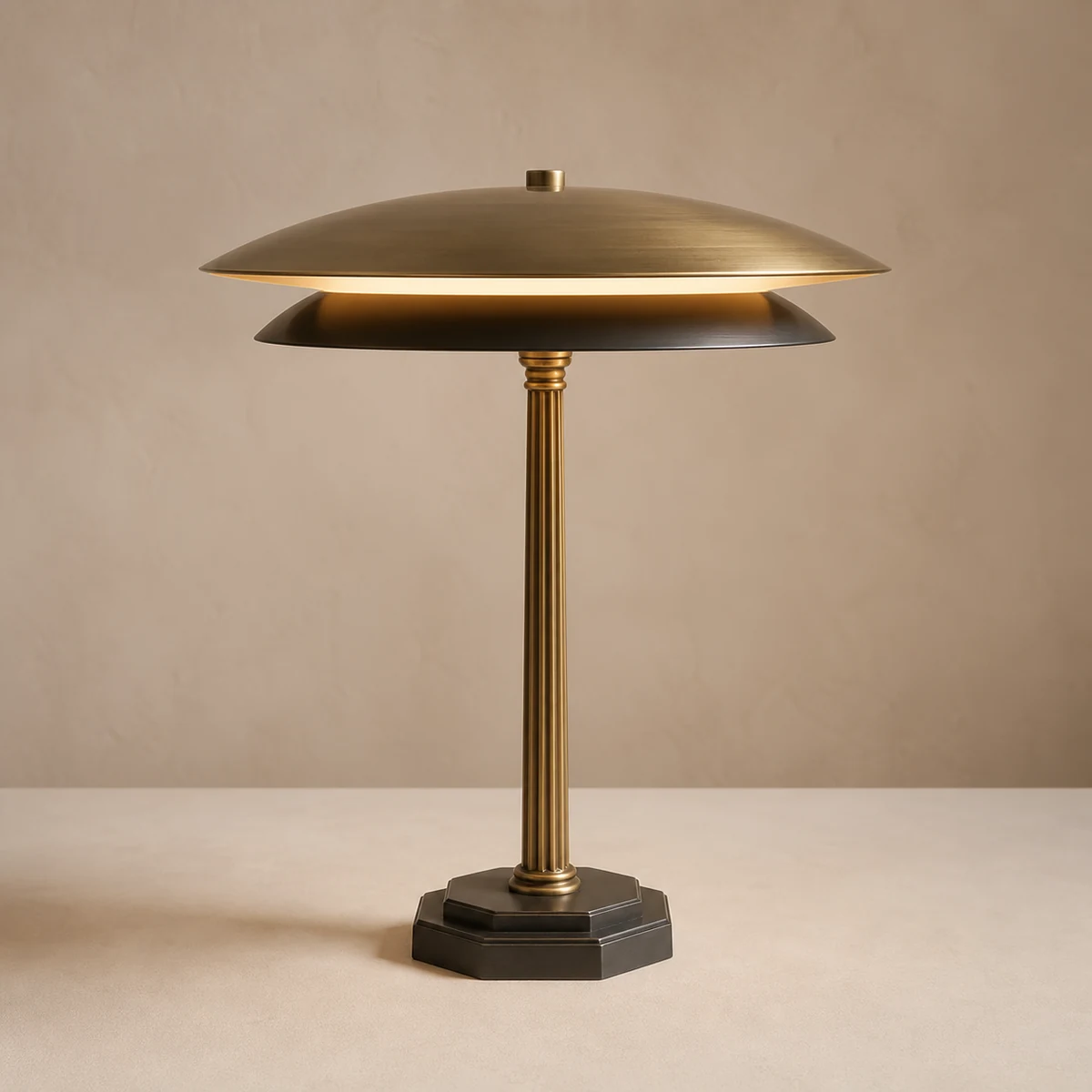
    Eclipse Twin takes its cue from that overlap. Two shallow planes sit close without becoming one, like two circles moving into alignment. The thin illuminated gap gives the lamp a sense of time passing, not a static decorative pose.

    Its emotional job is simple: keep the room warm enough for one more story.

    Why the form feels different

    The paired canopy is the signature. It creates depth from a profile that remains visually low, while the narrow stem and faceted base keep the silhouette precise. The form changes as a person walks past it; one plane briefly hides the other, then releases it.

    That movement makes the lamp feel designed rather than merely styled. It provides an identity from several viewpoints, useful in dining and hospitality interiors where guests approach from more than one direction.

    Eclipse Twin table lamp concept with two offset brass discs and a geometric dark base
    Eclipse Twin product concept. Final construction, dimensions, optical performance, and finish are subject to sampling.

    How to place it

    Eclipse Twin belongs on a sideboard close to the dining table, on a restaurant service console, or at the end of a banquette where it can contribute to the after-dinner atmosphere without occupying eating space. Its layered edge benefits from a darker background.

    Leave breathing room around the silhouette. If used in repetition, align the stems but allow the two-disc profiles to remain visible from the main circulation path.

    A buyer's guide to the first sample

    During sampling, assess the spacing and parallel relationship between the two planes, the consistency of the illuminated gap, and the center of gravity. Small changes here can turn a deliberate eclipse into an accidental stack.

    The final dimensions, lamp source, output, color temperature, dimming behavior, wired or rechargeable platform, finish, destination-market compliance, and packaging are to be developed and verified. The scene is a design narrative, not proof of a completed installation.

    The promise is not that this concept is already resolved. The promise is that the reason for the design is clear enough to guide every decision that follows.

    Questions buyers ask

    Why use two canopy planes?

    The overlap adds visual depth and creates a controlled illuminated gap while keeping the overall profile low.

    Is Eclipse Twin suitable for restaurant tables?

    It may be better on a sideboard, banquette end, or service console unless size, stability, and glare are engineered for the specific tabletop.

    Can it be adapted to rechargeable use?

    That route can be evaluated, but runtime, charging method, battery access, controls, and compliance must be defined during development.

    What should be approved before production?

    Geometry, gap consistency, finish, stability, light behavior, controls, market requirements, and final packaging.

    Continue the series with the previous design story or the next design story. Browse more JIANBIAN buyer guides and design stories.

    Develop this direction with JIANBIAN

    Share the destination market, project type, quantity, required date, preferred finish, wired or rechargeable direction, control method, and packaging channel. We will confirm the specification questions and a practical sampling route.

  • Stone Bell and the Ritual of Coming Home

    Stone Bell and the Ritual of Coming Home

    JIANBIAN DESIGN STORY · CONCEPT 04 OF 10

    Keys on stone. Coat off. Shoulders down. Stone Bell gives the ordinary act of coming home a clear beginning and a softer ending.

    Architect placing keys on an entry console beside the illuminated Stone Bell brass and stone table lamp
    Stone Bell in the human moment it was designed to support. Concept visualization; not a photograph of a completed installation.

    The moment we designed for

    Rain is still on the shoulders of the coat. A roll of drawings is tucked under one arm. Keys touch the console, and the day's noise finally loses its grip. The gesture takes seconds, but it tells the body that the outside world can remain outside.

    Stone Bell was conceived as a marker for that crossing. The canopy is protective rather than showy; the narrow brass stem lifts it just enough, while a dark stone base gives the hand and eye somewhere solid to land.

    The need beneath the object is a boundary. Good entry lighting does not only reveal the way in. It helps a person arrive.

    Why the form feels different

    A bell-like shade usually suggests softness and symmetry. Here, the material contrast changes the reading: warm metal above, mineral weight below. The base is not a decorative coaster. It is the visual reason the thin stem can feel composed.

    Natural-looking stone variation can make every piece feel individual, but it also demands disciplined selection. The design works when the base is expressive at close range and quiet from across the room.

    Stone Bell table lamp concept with a low brass shade, tapered stem, and dark stone base
    Stone Bell product concept. Final construction, dimensions, optical performance, and finish are subject to sampling.

    How to place it

    Use Stone Bell on an entry console, a hotel check-in side surface, or a bedside table where a small object needs to feel anchored. The stone should sit on a stable, level surface, and the canopy should remain below the primary eye line.

    It pairs well with dark wood, limewash, wool, leather, and aged metal. A shallow bowl or one ceramic vessel is enough; crowded styling weakens the base material's role.

    A buyer's guide to the first sample

    Specify the stone direction carefully: natural stone, engineered stone, or a mineral-effect alternative each changes weight, variation, cost, and packing. Review edge profiles, underside protection, color range, and how the base is isolated from the metal stem.

    Final dimensions, weight, output, color temperature, diffuser, controls, power platform, finish, compliance, and packaging remain subject to engineering and sample approval. Stone variation must be defined with an acceptable range, not promised from one visualization.

    The promise is not that this concept is already resolved. The promise is that the reason for the design is clear enough to guide every decision that follows.

    Questions buyers ask

    Is the stone base material confirmed?

    No. The image expresses a mineral base direction. Material, weight, color range, edge treatment, and cost must be selected during development.

    Where is Stone Bell most useful?

    Entry consoles, hospitality arrival points, bedside surfaces, and other locations that benefit from a compact, visually anchored light.

    How should natural variation be handled?

    Approve a range board or boundary samples so buyers and production teams share the same expectation.

    What details are needed for sampling?

    Market, use case, quantity, timeline, base material direction, metal finish, power method, controls, and packing channel.

    Continue the series with the previous design story or the next design story. Browse more JIANBIAN buyer guides and design stories.

    Develop this direction with JIANBIAN

    Share the destination market, project type, quantity, required date, preferred finish, wired or rechargeable direction, control method, and packaging channel. We will confirm the specification questions and a practical sampling route.
  • Ridge Lantern: Why Texture Makes Light Feel Personal

    Ridge Lantern: Why Texture Makes Light Feel Personal

    JIANBIAN DESIGN STORY · CONCEPT 05 OF 10

    Before color and furniture, designers often begin with touch. Ridge Lantern turns that instinct into light: quiet from a distance, richly detailed when you come close.

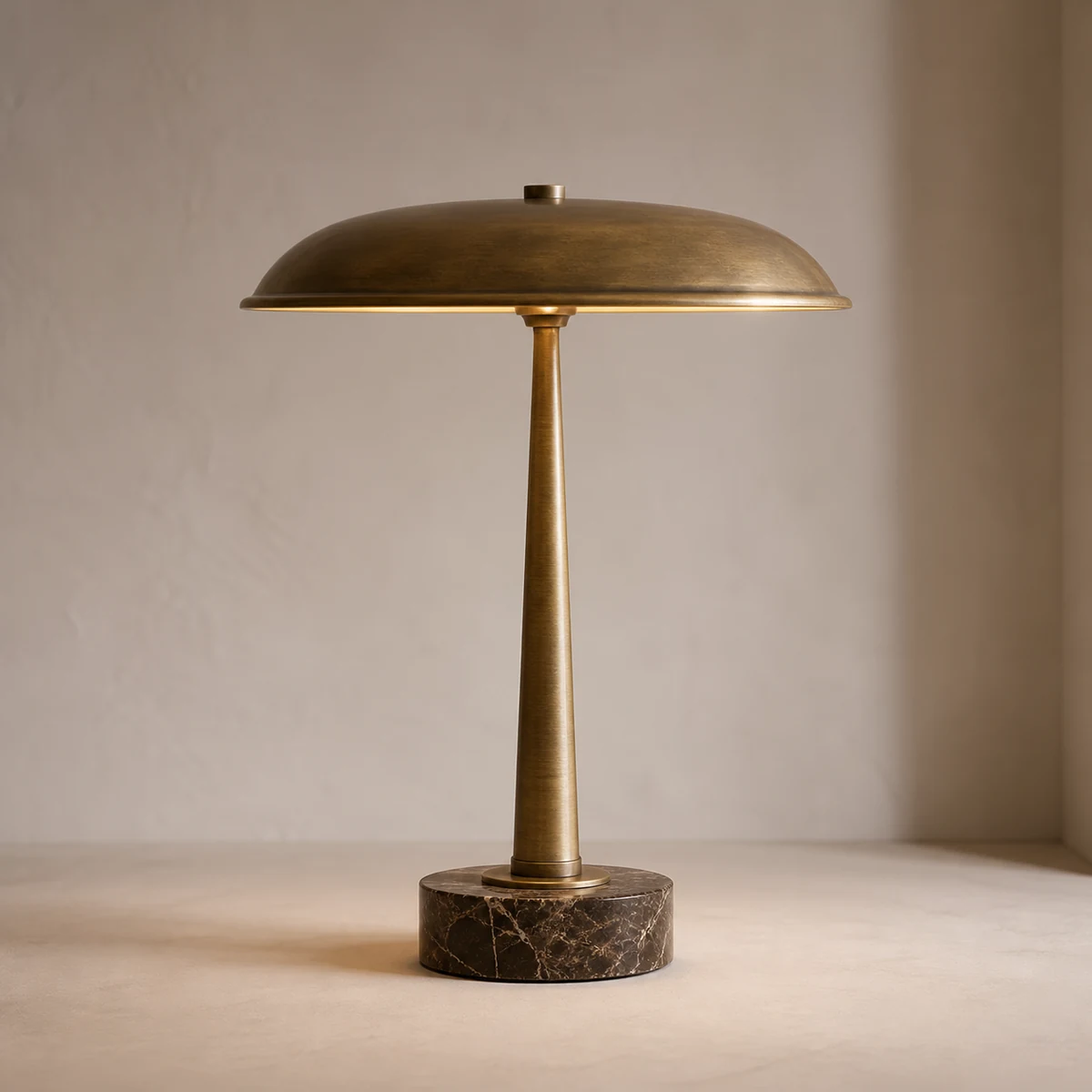
    Interior designer reviewing fabric samples beside the illuminated Ridge Lantern ribbed brass table lamp
    Ridge Lantern in the human moment it was designed to support. Concept visualization; not a photograph of a completed installation.

    The moment we designed for

    A designer runs her hand across two fabrics that appear almost identical on screen. One feels alive; the other merely looks correct. That difference—between an image and an encounter—is where memorable interiors begin.

    Ridge Lantern is built around the same idea. Fine radial ridges break a broad metal canopy into hundreds of small responses to light. The form stays disciplined, but it is never visually flat. As the viewer moves, the surface changes before the silhouette does.

    The deeper request is material intimacy: an object that rewards the person who comes near enough to notice.

    Why the form feels different

    Texture is not applied as a pattern after the form. It follows the canopy's geometry, making the light source and the material read as one decision. A smooth stem and dark flared base give the eye a rest beneath the active surface.

    This hierarchy matters. When every component asks for attention, a lamp becomes noisy. Ridge Lantern lets one detail carry the identity and allows the remaining parts to support it.

    Ridge Lantern table lamp concept with a fine ribbed dome, slim stem, and dark flared base
    Ridge Lantern product concept. Final construction, dimensions, optical performance, and finish are subject to sampling.

    How to place it

    The concept suits material libraries, boutique hotel rooms, restaurant sideboards, design studios, and residential spaces where texture is appreciated at close distance. Side light will reveal the ridges more clearly than flat frontal light.

    Pair it with woven textiles, honed stone, paper, or brushed timber. Highly polished surroundings can compete with the surface; matte neighbors give the metal room to breathe.

    A buyer's guide to the first sample

    The rib profile, spacing, seam strategy, finish build, and cleaning behavior should all be reviewed on the physical sample. A texture that looks precise in a rendering can feel too sharp, too soft, or inconsistent when manufactured at scale.

    Size, metal process, output, color temperature, diffuser, dimming, power source, finish durability, compliance, and packaging are open until the target market and price architecture are known. Approve the surface under both daylight and the lamp's own illumination.

    The promise is not that this concept is already resolved. The promise is that the reason for the design is clear enough to guide every decision that follows.

    Questions buyers ask

    Does the ribbing change the light?

    It primarily shapes the surface appearance, though the final profile and underside treatment can also affect reflections and perceived glare.

    What environments suit Ridge Lantern?

    Material-led guest rooms, studios, lounges, sideboards, and retail displays where close-up detail contributes to the experience.

    What should be checked on the finish sample?

    Ridge definition, color consistency, seam visibility, touch, cleaning behavior, and appearance in daylight and warm light.

    Can the design support a brand-specific palette?

    A finish family can be explored once the substrate, process, tolerance, quantity, and destination requirements are defined.

    Continue the series with the previous design story or the next design story. Browse more JIANBIAN buyer guides and design stories.

    Develop this direction with JIANBIAN

    Share the destination market, project type, quantity, required date, preferred finish, wired or rechargeable direction, control method, and packaging channel. We will confirm the specification questions and a practical sampling route.

  • Alabaster Halo and the Light a Child Remembers

    Alabaster Halo and the Light a Child Remembers

    JIANBIAN DESIGN STORY · CONCEPT 06 OF 10

    Children rarely remember the fixture. They remember the pool of light, the last page, and the person who stayed until the room felt safe.

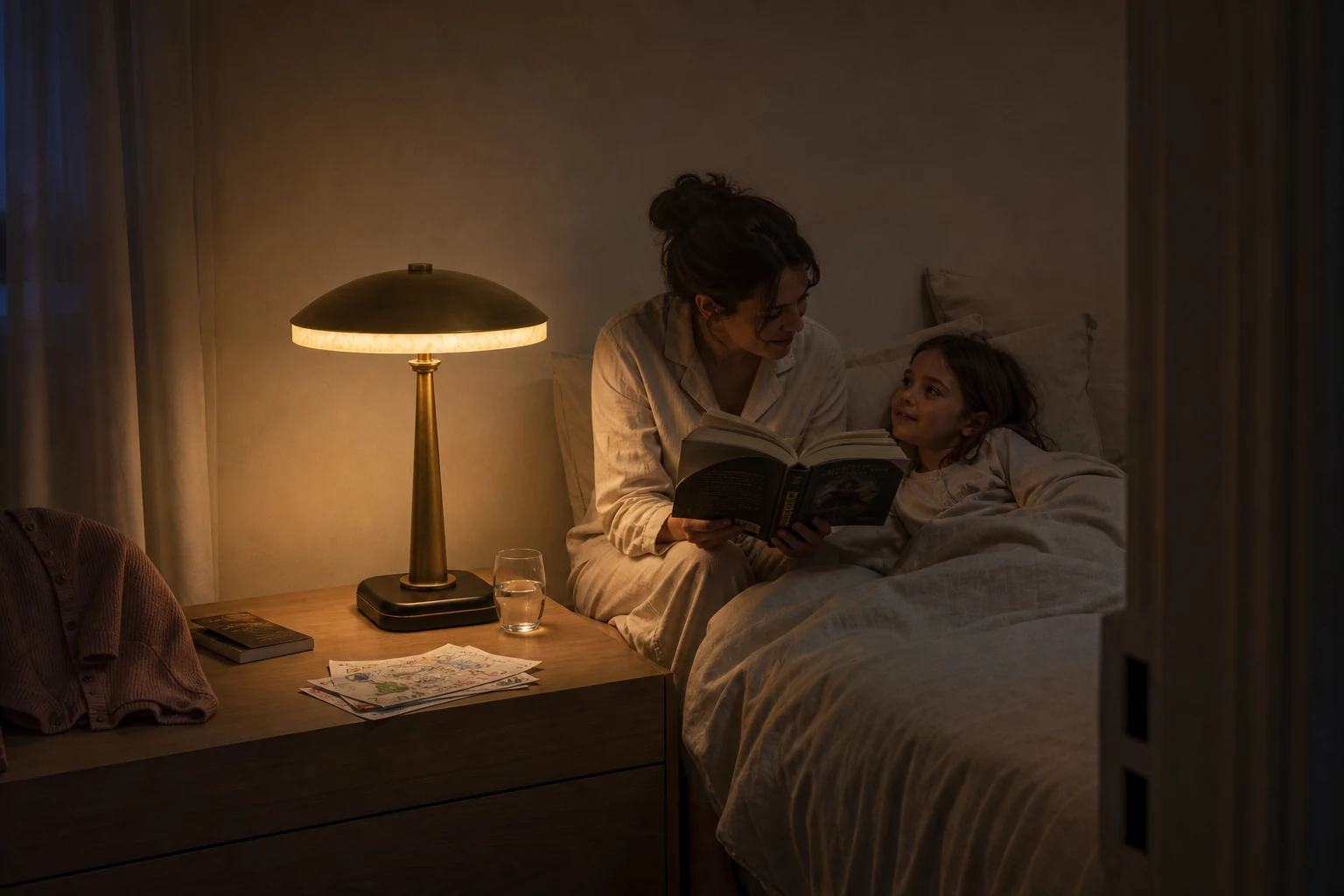
    Parent reading to a child in bed beside the illuminated Alabaster Halo warm bedside table lamp
    Alabaster Halo in the human moment it was designed to support. Concept visualization; not a photograph of a completed installation.

    The moment we designed for

    The last page is never really the last page. A child asks one more question, then another. The adult lowers their voice. The room outside the pool of light becomes less important, and bedtime changes from a rule into a shared place.

    Alabaster Halo was conceived for that held moment. A luminous stone-like band sits beneath the dark canopy, softening the transition between source and shadow. The ring gives the eye a warm boundary without exposing a hard point of light.

    What people carry forward is not the object alone. It is the memory of feeling safe enough to stop watching the door.

    Why the form feels different

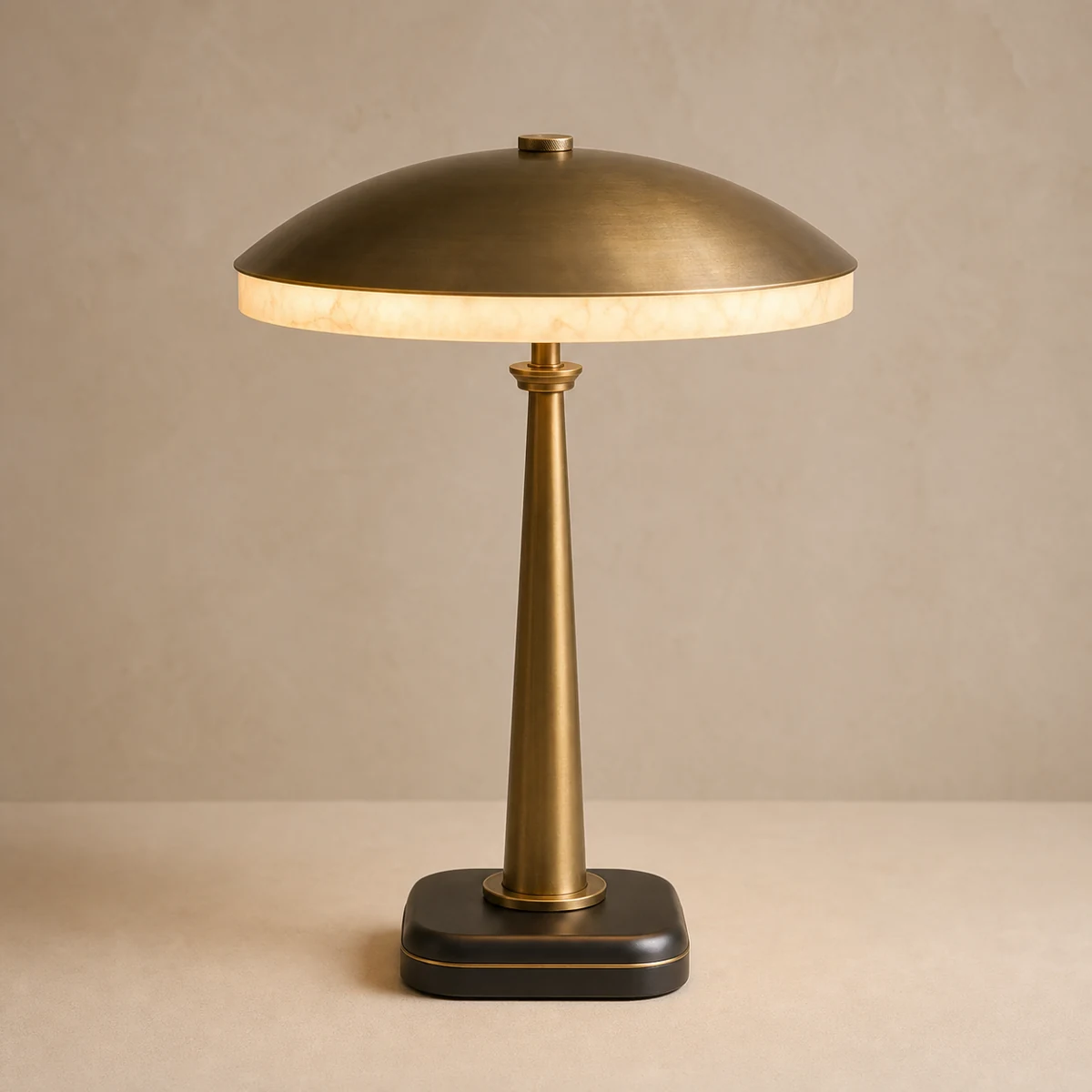
    The central gesture is the halo: a translucent-looking layer held between a dark upper shade and a slim brass stem. This makes the light itself part of the silhouette, rather than something hidden inside a metal cap.

    The stepped base repeats the ring at a lower, darker frequency, giving the lamp balance. The result can feel quietly ceremonial without becoming precious or theatrical.

    Alabaster Halo table lamp concept with a dark dome, luminous stone-like ring, brass stem, and stepped base
    Alabaster Halo product concept. Final construction, dimensions, optical performance, and finish are subject to sampling.

    How to place it

    Use the concept on bedside tables, in family hotel suites, reading corners, or wellness-oriented guest rooms. The final sample should be tested from lying, seated, and standing eye levels; comfortable bedroom lighting depends on the angle of view, not only the measured output.

    Allow the luminous ring to be visible against a calm wall. Soft linen, dark timber, brushed metal, and matte paint will support it without creating distracting reflections.

    A buyer's guide to the first sample

    The stone-like ring could lead to several material routes, each with different weight, diffusion, uniformity, cost, and durability. It should not be described as natural alabaster until the material is selected and documented.

    Final material, dimensions, light source, output, color temperature, dimming curve, power method, thermal design, controls, destination compliance, and packaging all require engineering and sample approval. For family settings, the intended user and placement should be stated clearly during development.

    The promise is not that this concept is already resolved. The promise is that the reason for the design is clear enough to guide every decision that follows.

    Questions buyers ask

    Is the luminous ring confirmed as natural alabaster?

    No. Alabaster describes the visual direction. The final stone, composite, glass, or diffuser material must be selected and verified.

    Can it be used as a reading lamp?

    That depends on final output, distribution, placement, and eye-level testing. The concept is currently positioned as a warm bedside layer.

    What should a hotel buyer test?

    Glare from multiple eye levels, control intuitiveness, cleanability, stability, light uniformity, finish durability, and replacement or charging routines.

    What starts a private-label sample?

    Provide the market, room type, quantity, required date, material preference, power and dimming needs, and packaging expectations.

    Continue the series with the previous design story or the next design story. Browse more JIANBIAN buyer guides and design stories.

    Develop this direction with JIANBIAN

    Share the destination market, project type, quantity, required date, preferred finish, wired or rechargeable direction, control method, and packaging channel. We will confirm the specification questions and a practical sampling route.
  • Verdigris Crown: A Beautiful Life Does Not Stay New

    Verdigris Crown: A Beautiful Life Does Not Stay New

    JIANBIAN DESIGN STORY · CONCEPT 07 OF 10

    A surface can be flawless and still feel empty. Verdigris Crown begins with a different belief: time is not damage when it gives an object character.

    Mature artist arranging garden branches beside the illuminated Verdigris Crown patina table lamp at dusk
    Verdigris Crown in the human moment it was designed to support. Concept visualization; not a photograph of a completed installation.

    The moment we designed for

    Late flowers are different from first flowers. Their leaves have marks. Their stems bend in unexpected places. Arranged by someone who has stopped asking beauty to be perfect, they hold more of the season than an immaculate bouquet ever could.

    Verdigris Crown belongs to that philosophy. The green canopy appears weathered rather than painted flat, set above a warm metal stem and a base with the presence of a small architectural plinth. The contrast lets age feel considered, not neglected.

    Its core request is emotional permission: a room can be elegant without erasing every trace of time.

    Why the form feels different

    Verdigris provides identity before ornament is added. Because no two aged-looking surfaces read exactly alike, the finish becomes part of the form. Subtle panel lines and a warm lower rim keep the canopy structured.

    The crown-like finial is deliberately small. It completes the silhouette without turning the lamp into a reproduction antique. The design should feel old enough to have a story and current enough to belong in a contemporary room.

    Verdigris Crown table lamp concept with a green patina canopy, brass stem, and stepped dark metal base
    Verdigris Crown product concept. Final construction, dimensions, optical performance, and finish are subject to sampling.

    How to place it

    Use Verdigris Crown in heritage hotels, libraries, collectors' rooms, garden-facing lounges, and residential spaces where natural materials are allowed to show variation. It is especially effective against plaster, dark timber, stone, and muted textiles.

    Keep nearby greenery loose rather than decorative. The finish already carries visual information. In a repeated hospitality scheme, variation should be controlled so the collection feels individual but not inconsistent.

    A buyer's guide to the first sample

    The word patina can describe many processes. A buyer should define whether the goal is a stable painted effect, a chemically treated metal surface, or another controlled finish system. Approve master and boundary samples, including color range, sheen, edge wear, sealing, cleanability, and aging behavior.

    Material, finish process, dimensions, output, color temperature, controls, wired or rechargeable architecture, compliance, and packaging remain open until sampling. The visualization expresses character; it does not guarantee uncontrolled natural aging or identical surface marks.

    The promise is not that this concept is already resolved. The promise is that the reason for the design is clear enough to guide every decision that follows.

    Questions buyers ask

    Will every Verdigris Crown shade look identical?

    That depends on the selected finish process. A controlled variation range should be agreed through master and boundary samples.

    Is the finish naturally aged metal?

    Not yet confirmed. The final route may be a treated metal, coating system, or another process chosen for the project.

    Where does the green patina work best?

    Heritage interiors, libraries, collector spaces, garden-facing lounges, and contemporary rooms with warm natural materials.

    What should be included in the finish approval?

    Color range, sheen, texture, edge behavior, sealing, cleaning method, durability expectation, and appearance under the project's lighting.

    Continue the series with the previous design story or the next design story. Browse more JIANBIAN buyer guides and design stories.

    Develop this direction with JIANBIAN

    Share the destination market, project type, quantity, required date, preferred finish, wired or rechargeable direction, control method, and packaging channel. We will confirm the specification questions and a practical sampling route.
  • Saddle Collar and the Things That Remember the Hand

    Saddle Collar and the Things That Remember the Hand

    JIANBIAN DESIGN STORY · CONCEPT 08 OF 10

    Some objects become ours only after our hands have changed them. Saddle Collar brings that sense of touch and memory to a composed, material-led lamp.

    Bookbinder repairing a notebook beside the illuminated Saddle Collar leather brass and walnut table lamp
    Saddle Collar in the human moment it was designed to support. Concept visualization; not a photograph of a completed installation.

    The moment we designed for

    A family notebook comes apart at the spine after years of being opened on the same recipes. Repairing it is not efficient. That is precisely why it matters. Thread is pulled through old paper, the cover is pressed flat, and an ordinary object is given back to the people who made it meaningful.

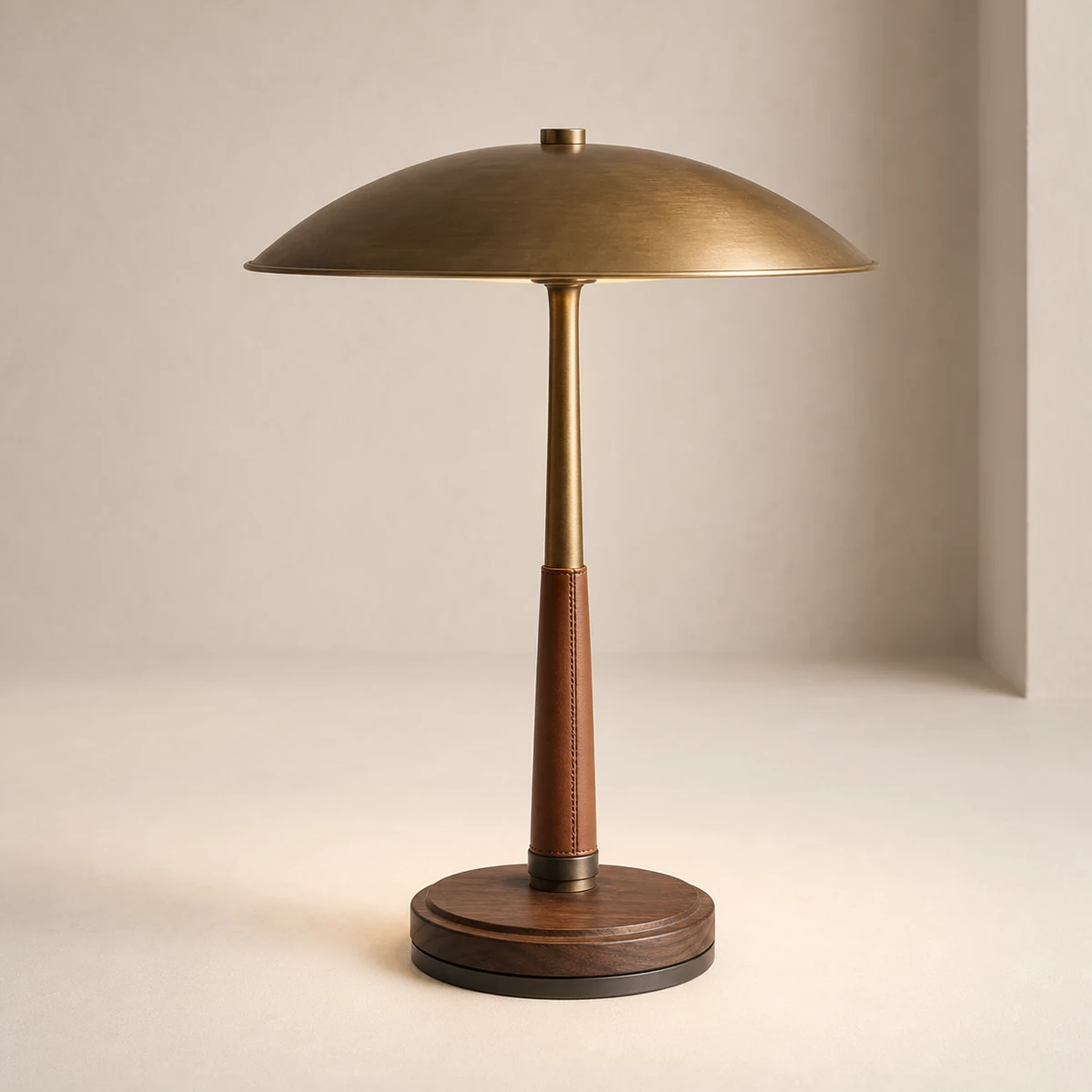
    Saddle Collar was designed for this world of contact. The brass canopy provides a calm horizontal line; a leather-wrapped section invites the eye toward the place where a hand might naturally steady the lamp; walnut gives the base warmth and familiarity.

    The deeper desire is not nostalgia. It is proof that a useful object can grow more personal instead of more disposable.

    Why the form feels different

    Three materials carry three roles. Metal reflects and defines. Leather softens the transition through the stem. Wood grounds the object with visible grain. The silhouette remains simple so the material boundaries can be read clearly.

    The leather collar should feel integrated, not added as decoration. Its seam, edge finish, thickness, and color relationship to the metal will determine whether the lamp feels crafted or merely accessorized.

    Saddle Collar table lamp concept with a brass dome, leather-wrapped stem, and dark walnut base
    Saddle Collar product concept. Final construction, dimensions, optical performance, and finish are subject to sampling.

    How to place it

    Saddle Collar suits libraries, private-club lounges, hotel suites, writing desks, and residential side tables. It works best where people can see the material junctions at close range and where the base has room to be touched without being knocked.

    Combine it with paper, linen, wool, and dark wood rather than a full set of matching leather accessories. One tactile accent feels intentional; too many can become a theme.

    A buyer's guide to the first sample

    Specify whether the collar is genuine leather, an alternative material, or another wrapped surface. Consider color variation, seam position, adhesion, abrasion, cleaning, humidity, labeling, and destination-market expectations. Wood species or wood-effect construction also needs a defined grain and color range.

    The final size, materials, light source, output, color temperature, dimming, power method, controls, compliance, and packaging are subject to engineering and sample approval. No material claim should be published until the bill of materials is confirmed.

    The promise is not that this concept is already resolved. The promise is that the reason for the design is clear enough to guide every decision that follows.

    Questions buyers ask

    Is the collar confirmed as genuine leather?

    No. Leather is the current design direction. The final material and labeling must be agreed for the market and project.

    Can the wood tone match a furniture collection?

    A target can be developed from a physical control sample, subject to substrate, grain, process, and acceptable variation.

    What must be checked on the wrapped stem?

    Seam placement, edge finish, thickness, adhesion, abrasion, cleaning behavior, color consistency, and the transition to metal.

    Which spaces suit Saddle Collar?

    Libraries, private clubs, hotel suites, writing areas, and other close-range settings where material detail matters.

    Continue the series with the previous design story or the next design story. Browse more JIANBIAN buyer guides and design stories.

    Develop this direction with JIANBIAN

    Share the destination market, project type, quantity, required date, preferred finish, wired or rechargeable direction, control method, and packaging channel. We will confirm the specification questions and a practical sampling route.
  • Arc Canopy and Room for One Unscripted Thought

    Arc Canopy and Room for One Unscripted Thought

    JIANBIAN DESIGN STORY · CONCEPT 09 OF 10

    Not every useful thought arrives on schedule. Arc Canopy creates a small territory for pausing—open on one side, protected on the other.

    Woman architect pausing by a city window beside the illuminated Arc Canopy asymmetric table lamp
    Arc Canopy in the human moment it was designed to support. Concept visualization; not a photograph of a completed installation.

    The moment we designed for

    The drawing is unfinished, but the pencil has stopped. Outside, office windows switch off one by one. For a few minutes there is no deadline to answer and no screen asking for attention. A thought that could not appear during the busy part of the day finally has room to arrive.

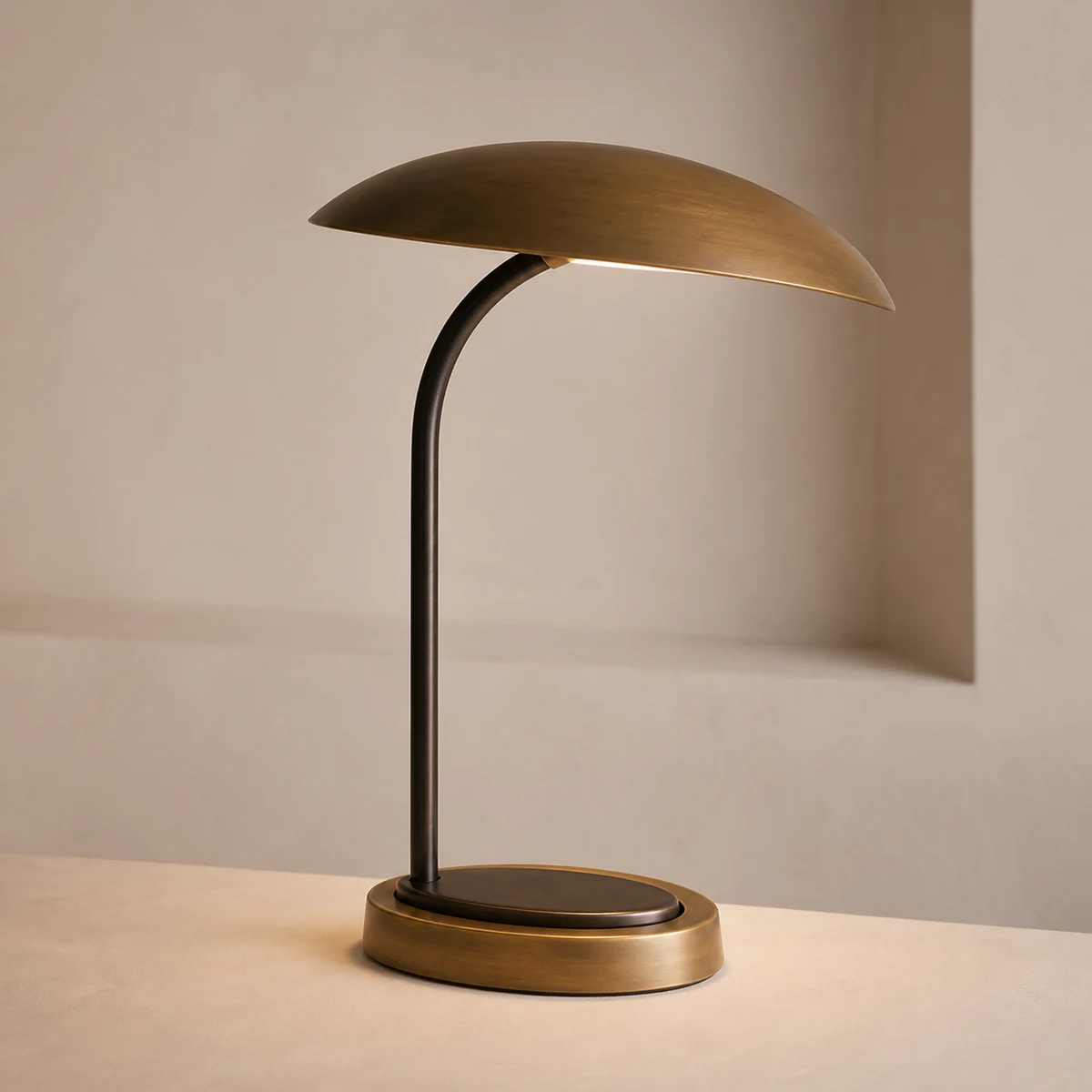
    Arc Canopy is shaped around that open pause. A thin curved stem reaches over the table without closing the space beneath it. The oval shade shelters the surface while leaving one side visually free, creating a small territory rather than a rigid workstation.

    Its core value is permission to be unproductive long enough to become present again.

    Why the form feels different

    The asymmetry changes the lamp's relationship to the user. Instead of rising through the center, the stem stands aside and makes room. The canopy appears to hover, held by a line that is structurally expressive but visually light.

    This makes proportion especially important. Too heavy a base or thick an arc would remove the tension; too little visual weight could make the form feel unstable. The design depends on a precise balance of reach, clearance, and calm.

    Arc Canopy table lamp concept with a dark curved stem, oval brass shade, and compact round base
    Arc Canopy product concept. Final construction, dimensions, optical performance, and finish are subject to sampling.

    How to place it

    Use Arc Canopy on a creative desk, a side table beside a chair, a penthouse window ledge, or a quiet hotel lounge corner. Orient the open side toward the user and check that the arc does not conflict with nearby shelving or objects.

    The silhouette benefits from a simple wall or window behind it. Keep the surface composition low so the curve can be read in one continuous gesture.

    A buyer's guide to the first sample

    Sampling should focus on stability, reach, base footprint, stem stiffness, joint quality, and the shade's relationship to the work surface. Test how the lamp is moved and operated; an asymmetric object can experience different loads from a centered lamp.

    Final dimensions, materials, output, beam distribution, color temperature, dimming, power architecture, controls, compliance, and packaging are open development items. The concept should not be represented as a certified task light until photometric and market requirements are verified.

    The promise is not that this concept is already resolved. The promise is that the reason for the design is clear enough to guide every decision that follows.

    Questions buyers ask

    Is Arc Canopy a certified task lamp?

    No. It is a design concept. Task-light performance can only be stated after the final optical and electrical specification is tested.

    Why is the stem offset?

    The offset arc opens the center of the surface and turns the illuminated area into a small territory rather than a conventional centered object.

    What is critical in the sample?

    Stability, reach, stiffness, joint quality, operation, glare, distribution, and how the base behaves when the lamp is moved.

    Where can it be specified?

    Creative desks, reading side tables, hospitality lounges, and reflective corners with enough clearance for the arc.

    Continue the series with the previous design story or the next design story. Browse more JIANBIAN buyer guides and design stories.

    Develop this direction with JIANBIAN

    Share the destination market, project type, quantity, required date, preferred finish, wired or rechargeable direction, control method, and packaging channel. We will confirm the specification questions and a practical sampling route.

  • Deco Totem: A Room With a Point of View

    Deco Totem: A Room With a Point of View

    JIANBIAN DESIGN STORY · CONCEPT 10 OF 10

    Some rooms are beautifully finished and completely forgettable. Deco Totem is for the opposite kind: a room that reveals its character before anyone explains it.

    Three friends laughing after a gallery opening beside the illuminated Deco Totem statement table lamp
    Deco Totem in the human moment it was designed to support. Concept visualization; not a photograph of a completed installation.

    The moment we designed for

    Three people return from a gallery opening and continue the conversation in a room that feels collected rather than decorated. Nobody points out the lamp. They do not need to. Its geometry has already told them that the host notices form, enjoys tension, and is not afraid of a room with an opinion.

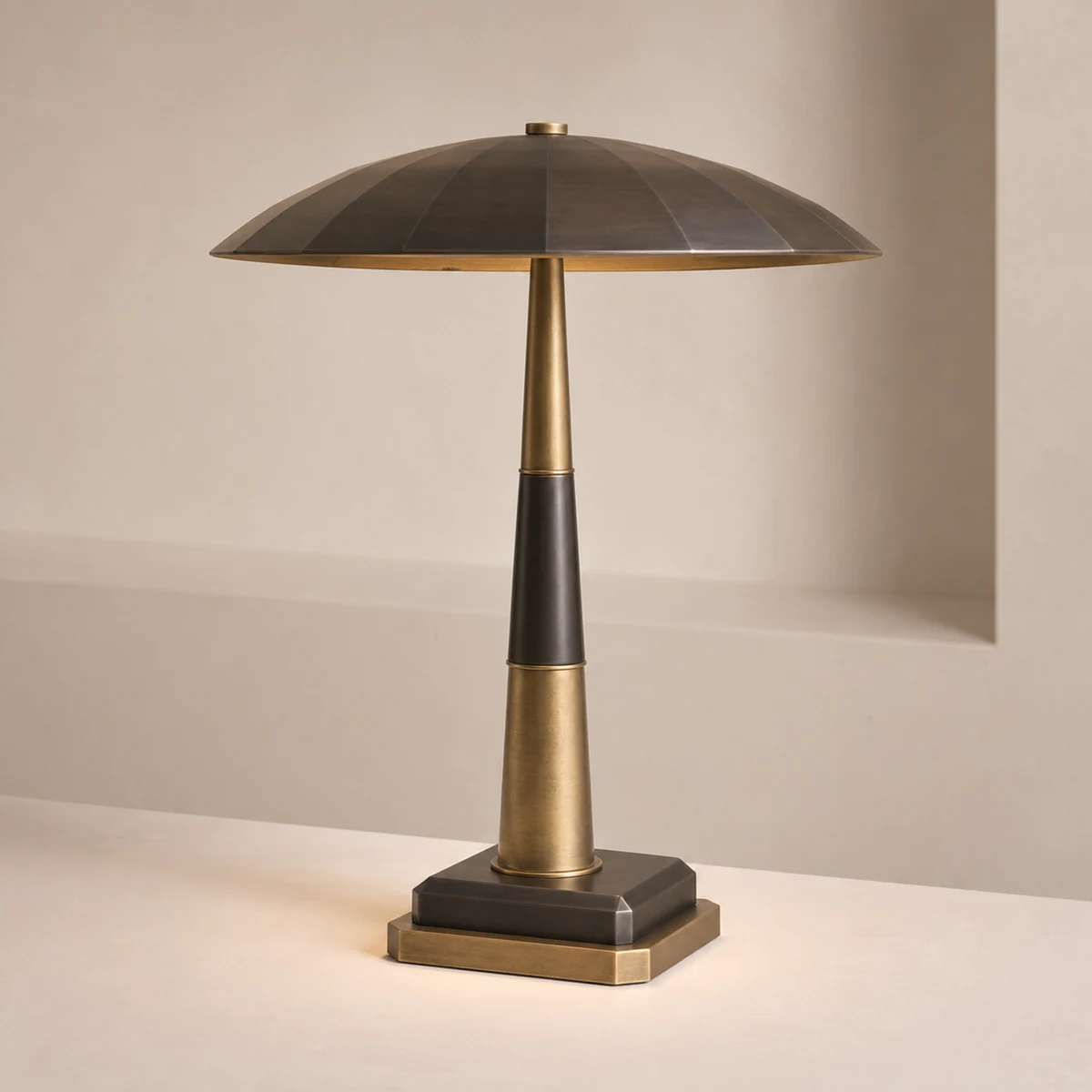
    Deco Totem was drawn to create that first impression without becoming a costume. A faceted canopy, segmented stem, and clipped-square base borrow the confidence of historic geometric design, but the palette and proportions remain restrained.

    The request behind it is distinction with discipline: recognizable enough to be remembered, composed enough to live with.

    Why the form feels different

    The stem is treated as a vertical composition rather than a connector. Brass sections and dark rings create rhythm, while the base translates a square into softened, stepped planes. Above, the canopy's facets catch different levels of light as people move through the room.

    This is a statement piece, but its statement comes from structure. It does not require decorative pattern, oversized scale, or a highly polished finish to become the visual punctuation in a room.

    Deco Totem statement table lamp concept with a faceted canopy, segmented brass stem, and clipped square base
    Deco Totem product concept. Final construction, dimensions, optical performance, and finish are subject to sampling.

    How to place it

    Specify Deco Totem on a cocktail-lounge console, private dining sideboard, collector's cabinet, boutique hotel reception credenza, or residential drinks table with generous clearance. A darker wall will sharpen its silhouette and make the warm lower rim more visible.

    Use one as punctuation or repeat it with strict spacing. Surround it with art and books that feel accumulated over time, not props selected to match the lamp. The room should have a point of view, not a theme.

    A buyer's guide to the first sample

    The sample review should examine facet alignment, transitions between stem segments, base edges, finish breaks, center of gravity, and the underside light. Geometric designs reveal small inconsistencies quickly, so visual tolerances need to be discussed early.

    Final dimensions, construction, output, color temperature, controls, dimming, wired or rechargeable platform, finish, compliance, and packaging remain open. Any period label describes the design influence, not an antique claim or a licensed historical reproduction.

    The promise is not that this concept is already resolved. The promise is that the reason for the design is clear enough to guide every decision that follows.

    Questions buyers ask

    Is Deco Totem a reproduction of a historic lamp?

    No. It is a contemporary concept informed by geometric design language, not a claimed antique or licensed reproduction.

    Where is a statement lamp most effective?

    On a lounge console, private dining sideboard, reception credenza, collector cabinet, or drinks table with enough negative space.

    Which visual tolerances need early review?

    Facet alignment, stem-segment transitions, base edges, finish breaks, stability, and the consistency of the illuminated underside.

    Can it become a coordinated collection?

    Related forms and finishes can be explored after the lead sample establishes proportion, material language, power architecture, and target price direction.

    Continue the series with the previous design story or the next design story. Browse more JIANBIAN buyer guides and design stories.

    Develop this direction with JIANBIAN

    Share the destination market, project type, quantity, required date, preferred finish, wired or rechargeable direction, control method, and packaging channel. We will confirm the specification questions and a practical sampling route.
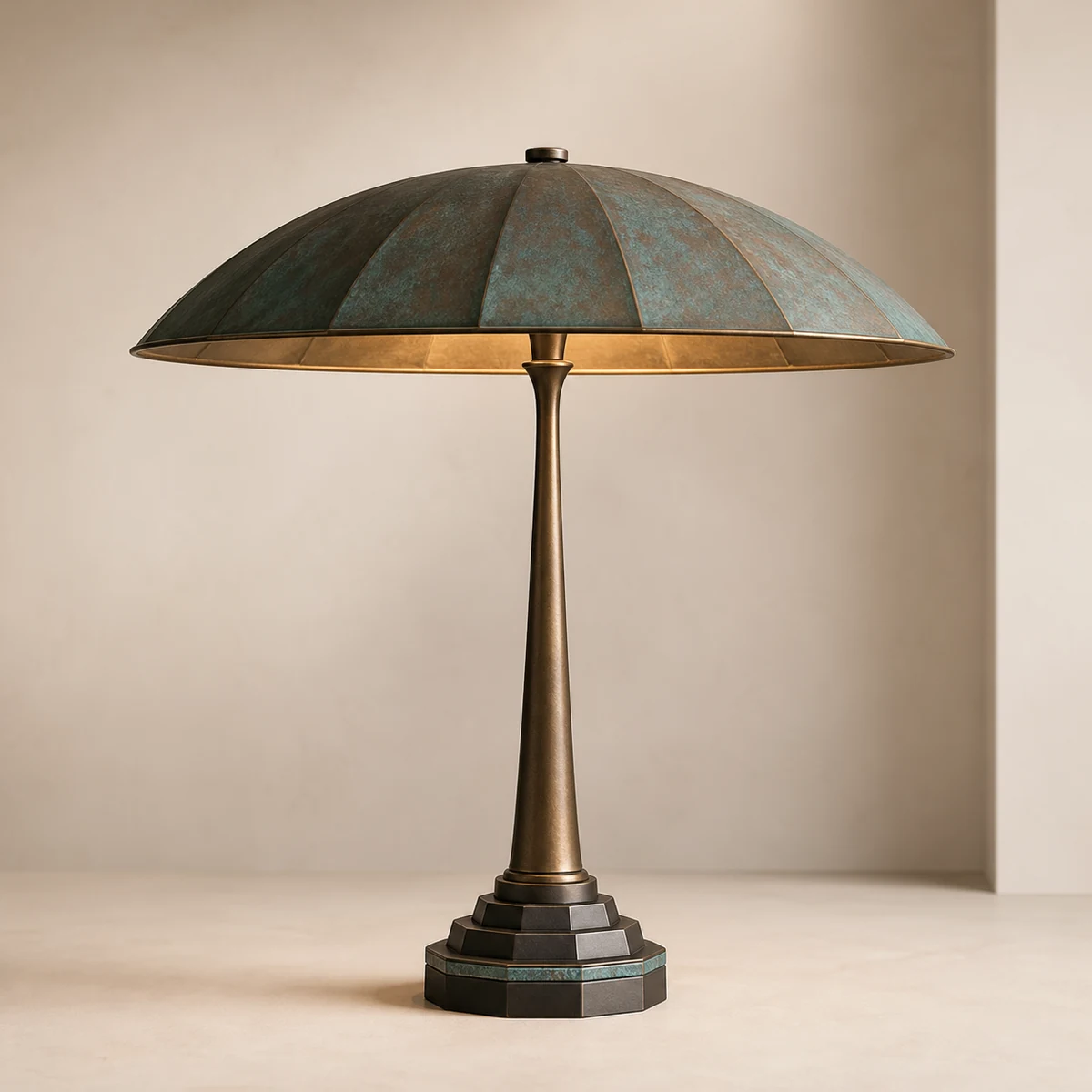
  • Halo Rib and the Quiet Hour Before Guests Arrive

    Halo Rib and the Quiet Hour Before Guests Arrive

    JIANBIAN DESIGN STORY · CONCEPT 01 OF 10

    Before a room welcomes anyone else, it has to welcome the person who lives there. Halo Rib turns that overlooked pause into a small ritual of arrival.

    Woman preparing an entry console beside the illuminated Halo Rib sculptural brass table lamp at blue hour
    Halo Rib in the human moment it was designed to support. Concept visualization; not a photograph of a completed installation.

    The moment we designed for

    There is an hour before guests arrive when a home belongs completely to its owner. A record is chosen. A jacket is put away. The bowl by the door is cleared without hurry. Nothing looks dramatic from the outside, yet the room is changing from a place passed through into a place ready to receive.

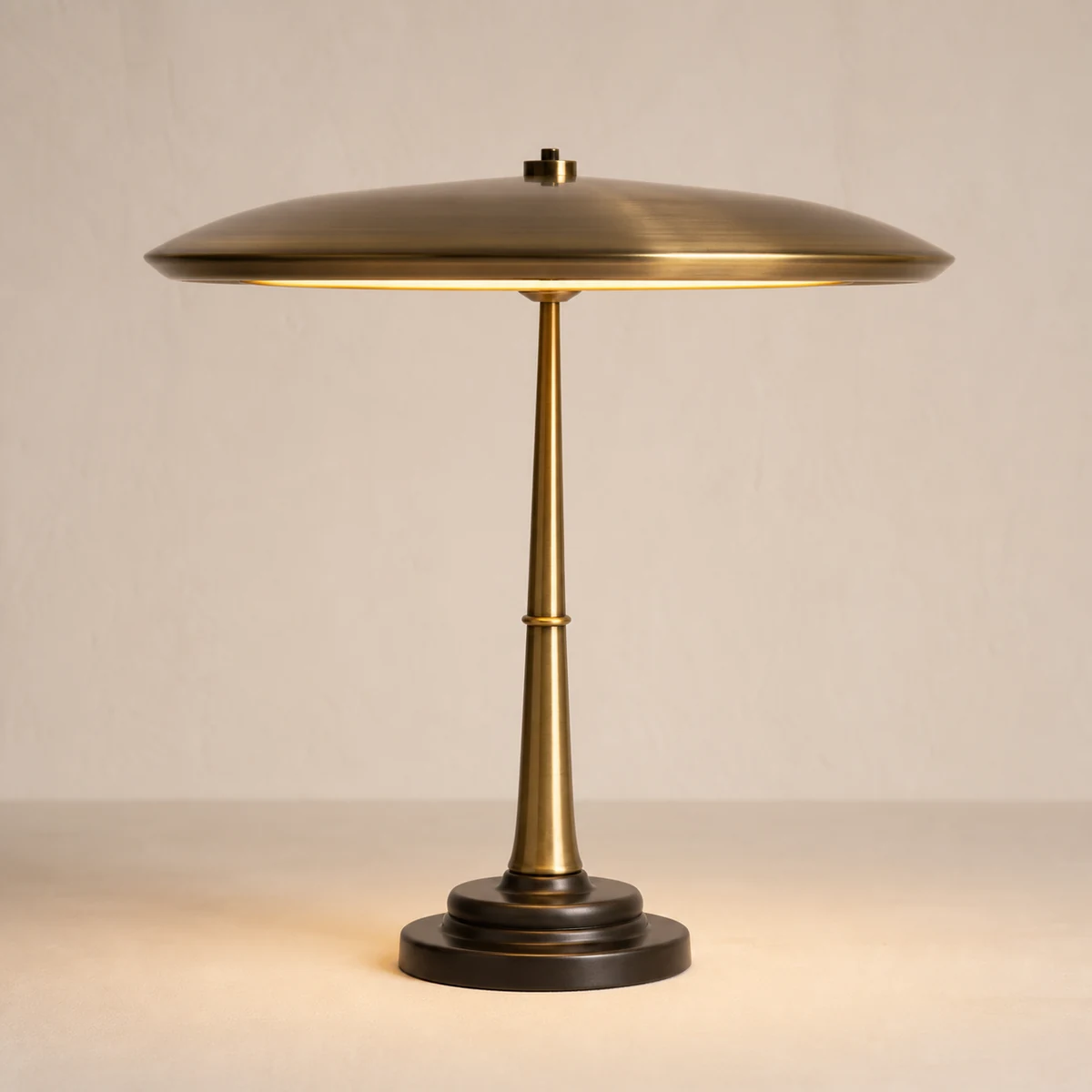
    Halo Rib was drawn for that threshold. Its broad, shallow canopy holds light close to the surface below, while the narrow stem leaves the surrounding wall and objects visually calm. The lamp does not announce an occasion. It creates the composure from which an occasion can begin.

    That is the deeper request behind this design: not more brightness, but a gentler transition. The first person the room welcomes is the person coming home.

    Why the form feels different

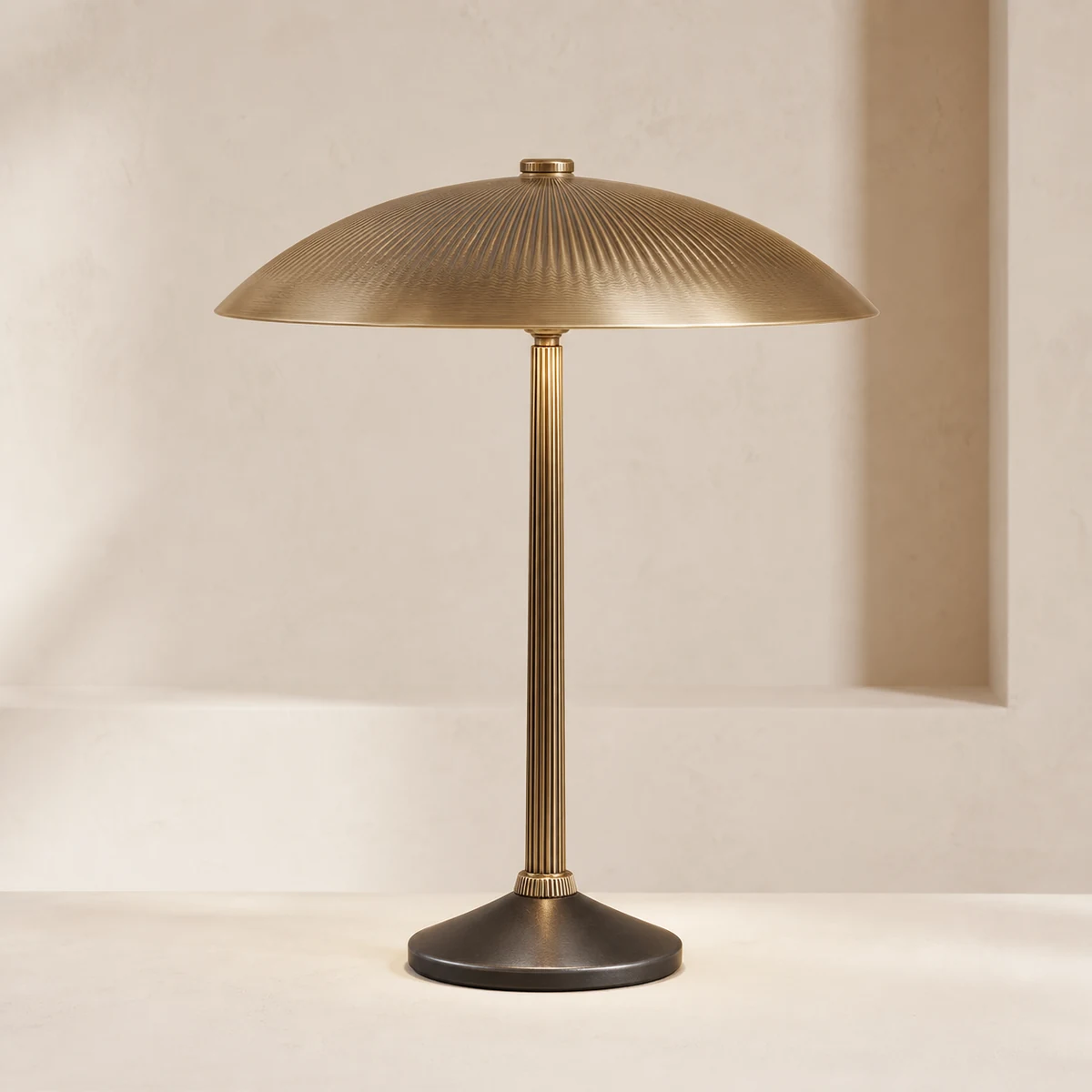
    The familiar dome is made more architectural by three decisions: a low horizontal profile, a long tapered stem, and a dark concentric base. The contrast gives the lamp a grounded silhouette without making it heavy.

    A restrained brass finish carries warmth even when the lamp is off. Fine ribbing and stepped details are intended to reward a closer look rather than compete across the room. From a distance, the form is calm; nearby, it becomes tactile.

    Halo Rib brass dome table lamp concept with a tapered stem and dark stepped base
    Halo Rib product concept. Final construction, dimensions, optical performance, and finish are subject to sampling.

    How to place it

    Place Halo Rib on an entry console where the canopy can sit below eye level and create a soft landing point. It can also work on a hospitality reception credenza, a private-club sideboard, or between two lounge chairs where direct glare would interrupt conversation.

    Keep the styling low and edited: one tray, a small artwork, or a stack of books is enough. The lamp gains authority from negative space. For specification, test the finish beside the actual wall color and timber sample; warm metals can read very differently under cool ambient light.

    A buyer's guide to the first sample

    For a private-label or project version, the visual priority is the relationship between canopy diameter, stem height, and base weight. The sample should be reviewed both switched off and illuminated. Confirm whether the intended setting calls for wired or rechargeable power, the dimming method, target market, plug or charging architecture, diffuser treatment, finish tolerance, and retail or project packaging.

    The image communicates design intent, not a frozen technical specification. Dimensions, lumen output, color temperature, battery configuration, controls, compliance requirements, and packing must be agreed against the sample and destination market.

    The promise is not that this concept is already resolved. The promise is that the reason for the design is clear enough to guide every decision that follows.

    Questions buyers ask

    Is Halo Rib shown as a finished production model?

    No. It is a design concept and lifestyle visualization. Final engineering and commercial specifications are confirmed through sampling.

    Where does this lamp work best?

    Entry consoles, lounge sideboards, reception credenzas, and other surfaces where a low, glare-conscious pool of light is more useful than broad room lighting.

    Can the finish be developed for a private-label collection?

    Finish direction can be discussed, but color, texture, tolerance, and durability should be approved on physical finish samples.

    What should a buyer send for a quotation?

    Destination market, project type, quantity, required date, preferred finish, power architecture, control method, and packaging channel.

    Continue the series with the previous design story or the next design story. Browse more JIANBIAN buyer guides and design stories.

    Develop this direction with JIANBIAN

    Share the destination market, project type, quantity, required date, preferred finish, wired or rechargeable direction, control method, and packaging channel. We will confirm the specification questions and a practical sampling route.

Follow Jian Bian