
DISLUNA DESIGN STORY · CONCEPT 03 OF 10
Plates are empty and the useful part of dinner is over. Eclipse Twin is for the part that follows—the stories people tell only when nobody is rushing away.
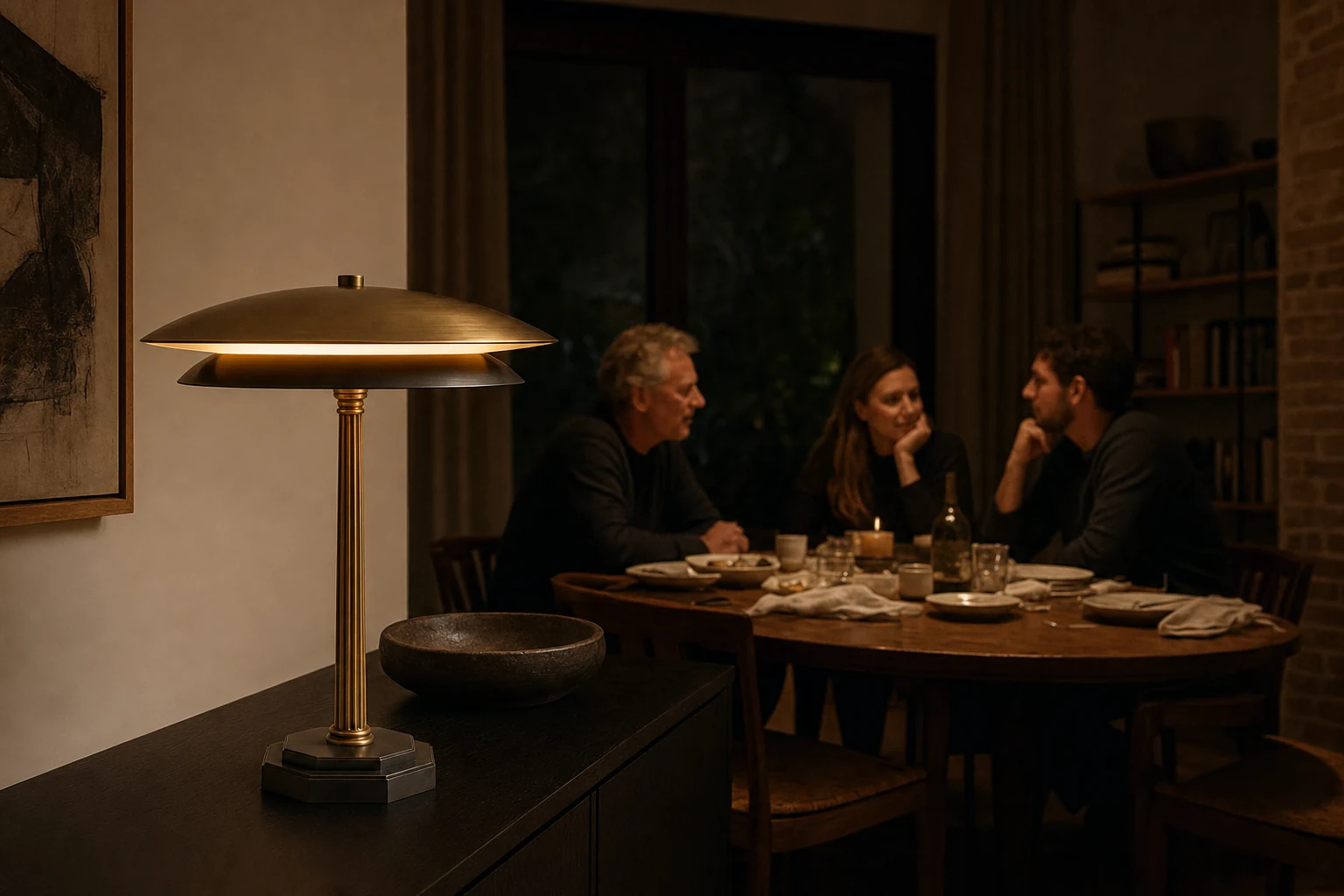
The moment we designed for
The plates have been pushed aside. Someone repeats the best line from the story and everybody laughs again. This is the interval restaurants try to create and homes remember: the meal is finished, yet the table still has a hold on the people around it.
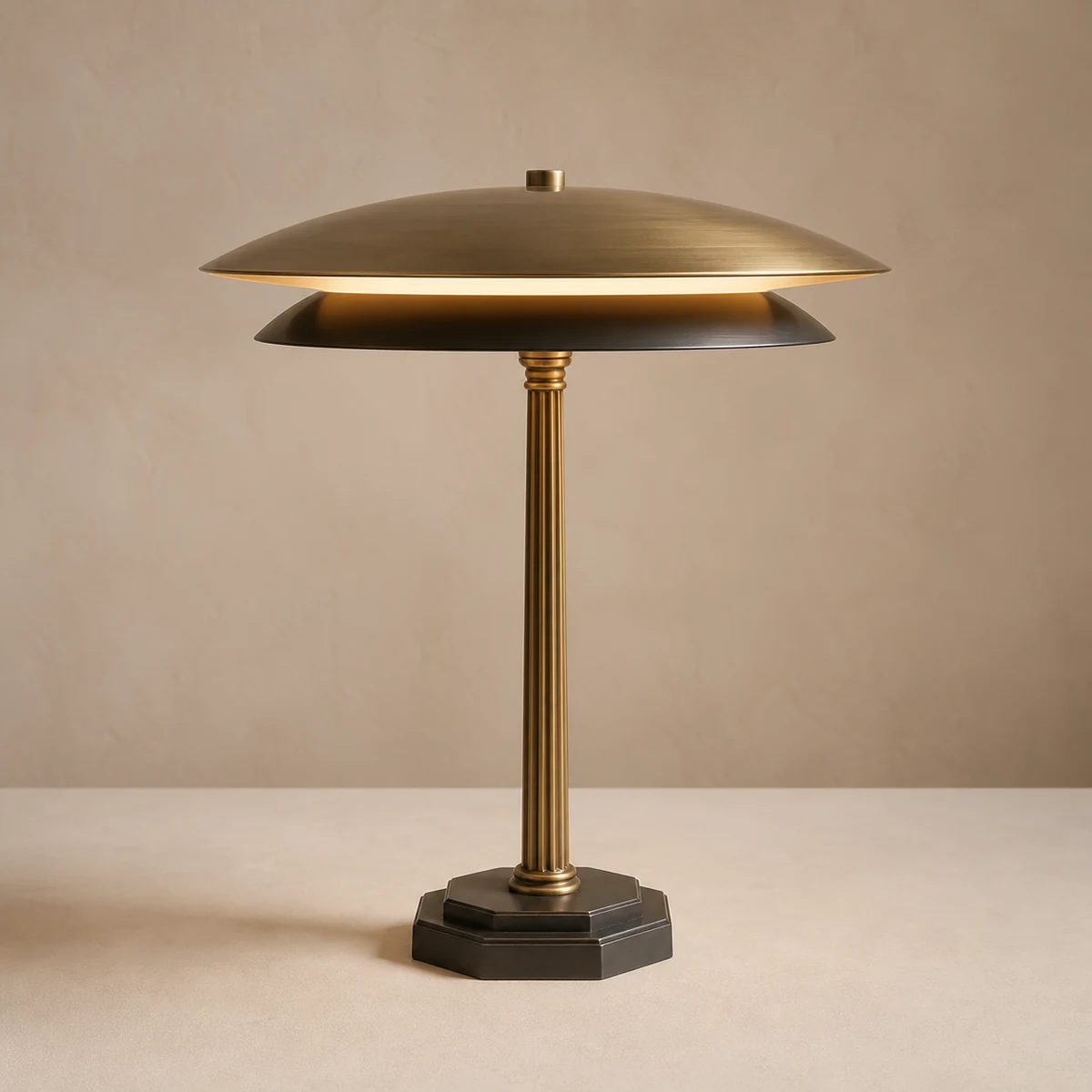
Eclipse Twin takes its cue from that overlap. Two shallow planes sit close without becoming one, like two circles moving into alignment. The thin illuminated gap gives the lamp a sense of time passing, not a static decorative pose.
Its emotional job is simple: keep the room warm enough for one more story.
Why the form feels different
The paired canopy is the signature. It creates depth from a profile that remains visually low, while the narrow stem and faceted base keep the silhouette precise. The form changes as a person walks past it; one plane briefly hides the other, then releases it.
That movement makes the lamp feel designed rather than merely styled. It provides an identity from several viewpoints, useful in dining and hospitality interiors where guests approach from more than one direction.
How to place it
Eclipse Twin belongs on a sideboard close to the dining table, on a restaurant service console, or at the end of a banquette where it can contribute to the after-dinner atmosphere without occupying eating space. Its layered edge benefits from a darker background.
Leave breathing room around the silhouette. If used in repetition, align the stems but allow the two-disc profiles to remain visible from the main circulation path.
A buyer's guide to the first sample
During sampling, assess the spacing and parallel relationship between the two planes, the consistency of the illuminated gap, and the center of gravity. Small changes here can turn a deliberate eclipse into an accidental stack.
The final dimensions, lamp source, output, color temperature, dimming behavior, wired or rechargeable platform, finish, destination-market compliance, and packaging are to be developed and verified. The scene is a design narrative, not proof of a completed installation.
The promise is not that this concept is already resolved. The promise is that the reason for the design is clear enough to guide every decision that follows.
Questions buyers ask
Why use two canopy planes?
The overlap adds visual depth and creates a controlled illuminated gap while keeping the overall profile low.
Is Eclipse Twin suitable for restaurant tables?
It may be better on a sideboard, banquette end, or service console unless size, stability, and glare are engineered for the specific tabletop.
Can it be adapted to rechargeable use?
That route can be evaluated, but runtime, charging method, battery access, controls, and compliance must be defined during development.
What should be approved before production?
Geometry, gap consistency, finish, stability, light behavior, controls, market requirements, and final packaging.
Continue the series with the previous design story or the next design story. Browse more DISLUNA buyer guides and design stories.
Develop this direction with DISLUNA
Share the destination market, project type, quantity, required date, preferred finish, wired or rechargeable direction, control method, and packaging channel. We will confirm the specification questions and a practical sampling route.