Restaurant lamp fleets · Centralized charging · OEM / ODM programs

Mobile fleet charging for design-led hospitality

Charge the fleet. Clear the floor.

A three-tier mobile system that gives restaurant teams one place to charge, store, count and deploy cordless table lamps—without leaving a web of loose cables in guest-facing spaces.

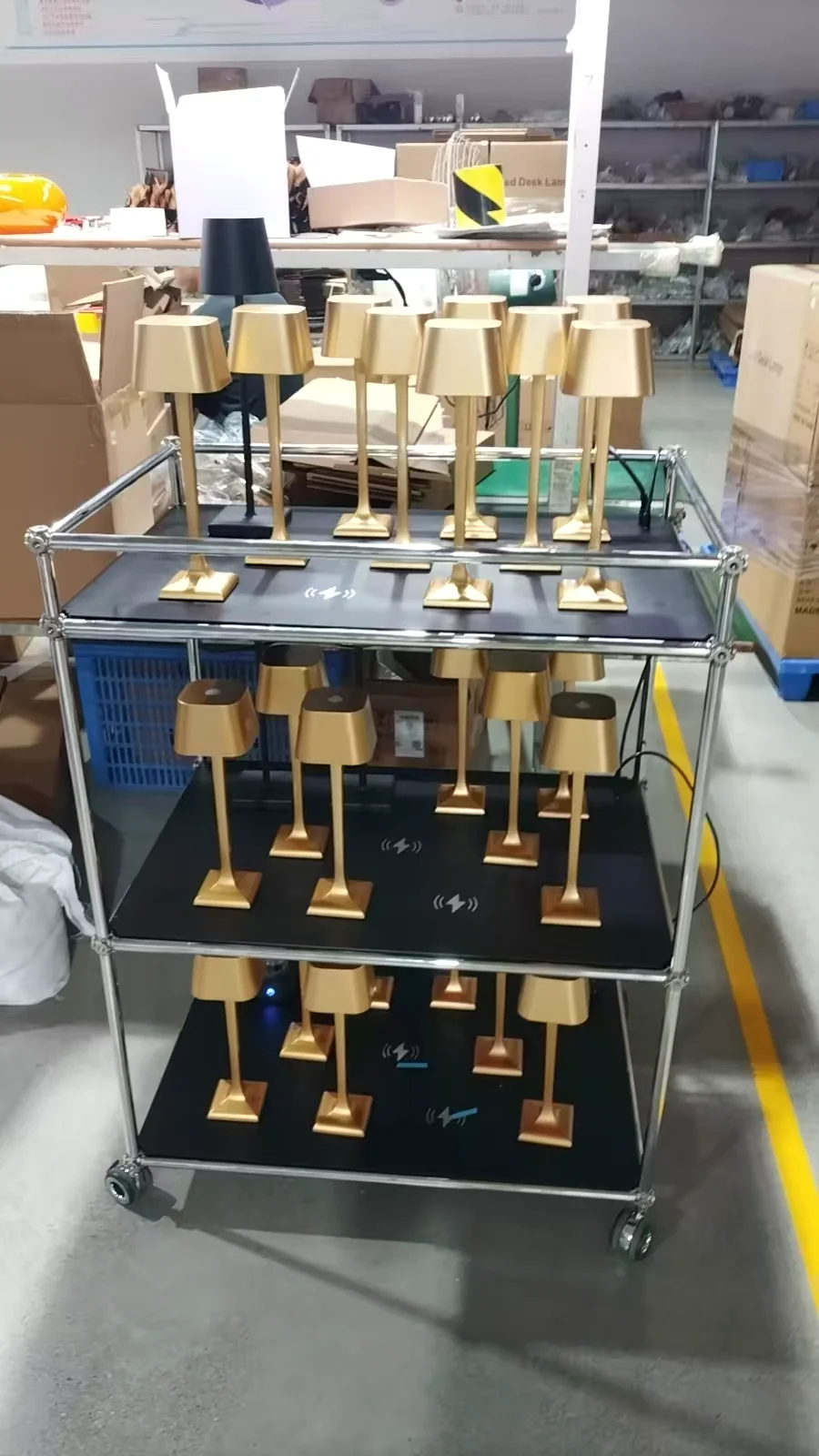
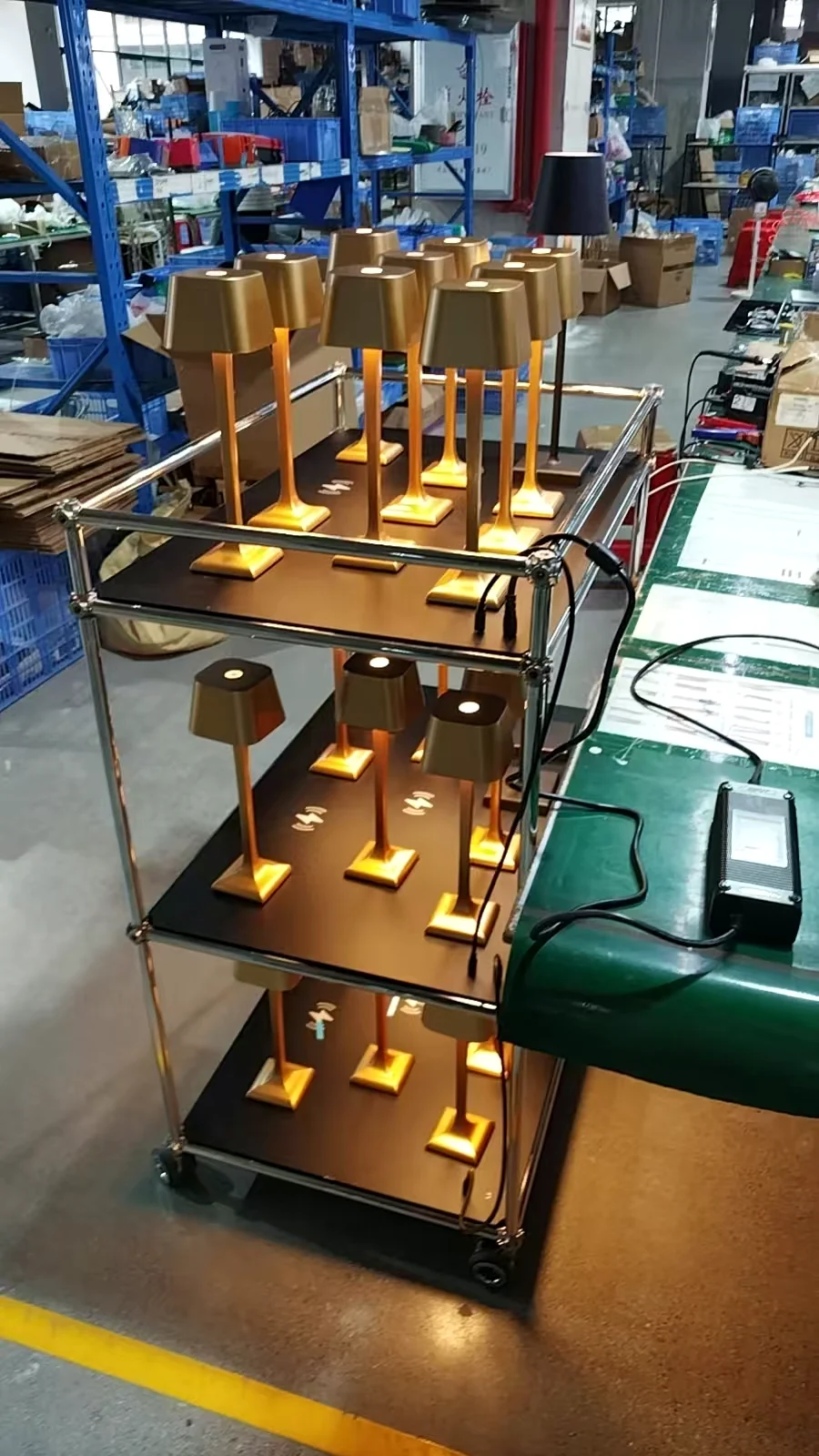
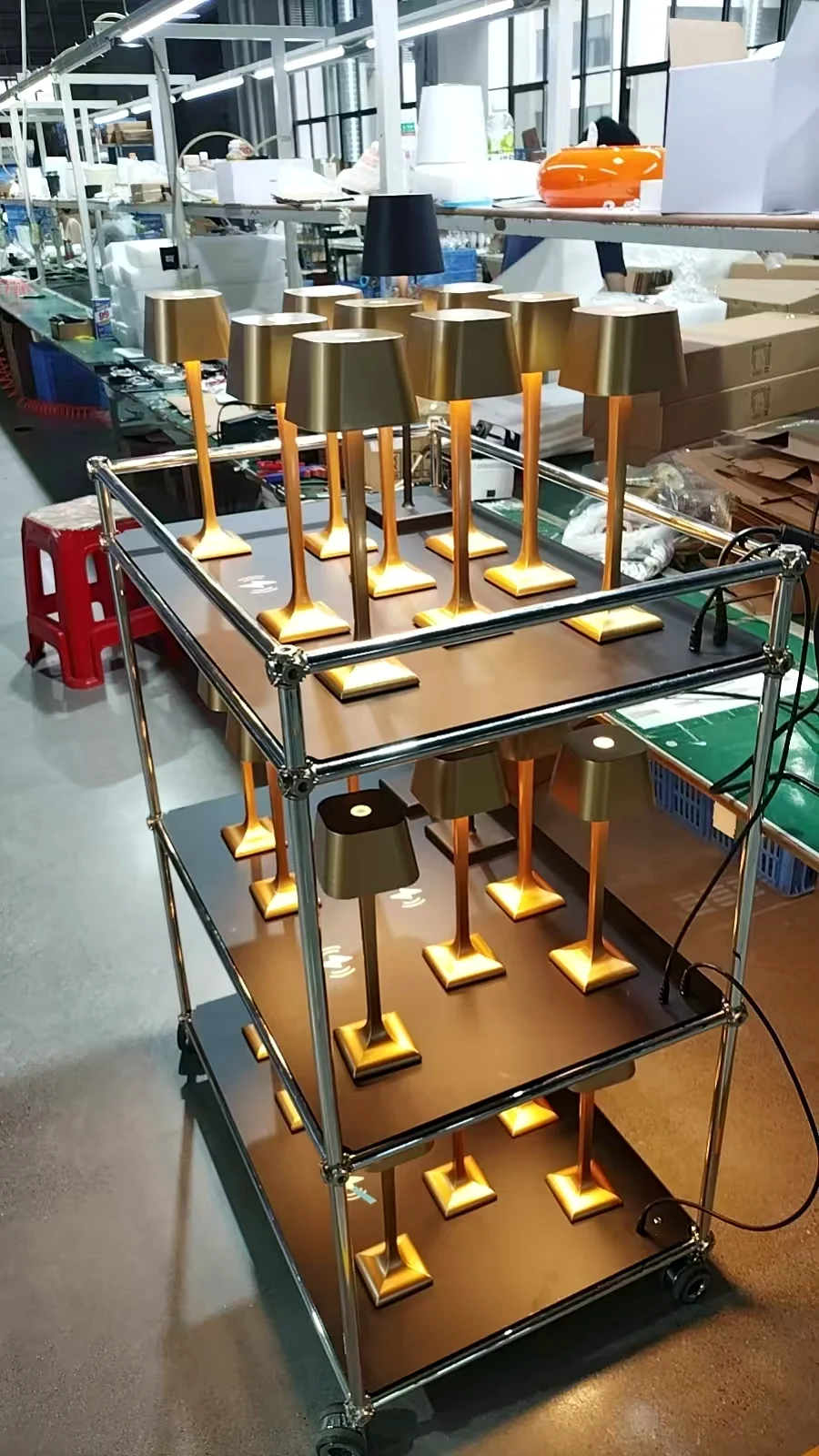
Jian Bian three-tier restaurant lamp charging trolley during factory testing
3-tier systemReal factory-floor configuration shown. Final lamp fit and electrical specification are approved by sample.
33Reference charging positions: 11 × 3 powered shelves
15 WReference power at each marked charging position
780 × 530Reference footprint in millimetres
MobileCaster-based storage, charging and floor deployment

Factory evidence, not a stock render

One working system.
Four real angles.

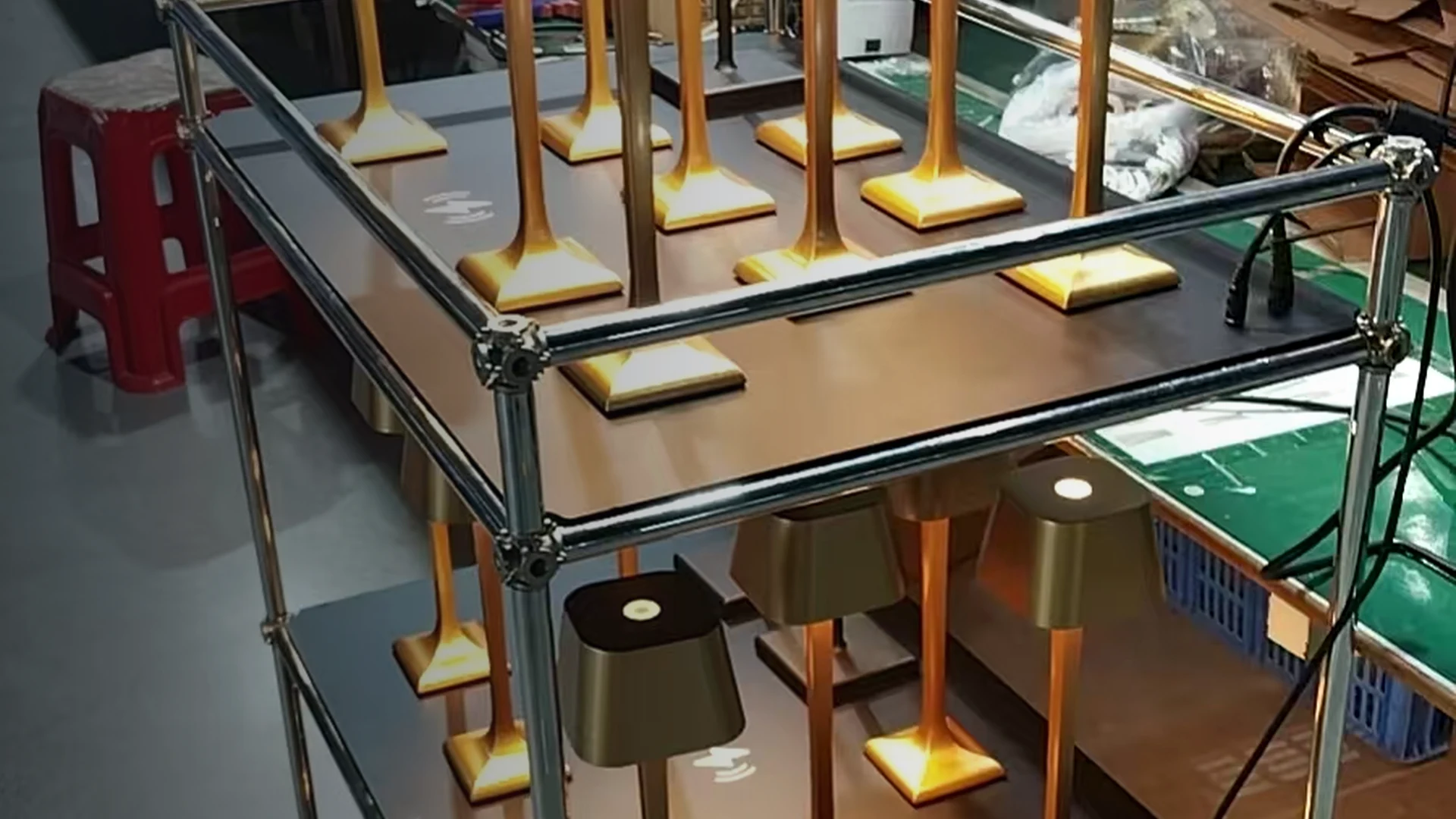
These images were supplied by Jian Bian and show the assembled trolley with cordless table lamps during factory-floor charging checks. They are not presented as completed restaurant installations.

Operational value

A better closing shift starts with one home for every lamp.

The trolley is designed as an operating system, not simply a piece of furniture. Staff can return lamps to marked positions, identify missing units, charge the fleet together and roll the prepared set toward the service area before the next shift.

Because charging performance depends on the exact lamp base, electrical input and alignment, the selected lamp and trolley should be approved together as one configuration.

01

Collect

Move used lamps off tables and return each unit to a visible charging position.

02

Count

Use the shelf layout to spot missing units before the team closes the floor.

03

Charge

Centralize the power connection and verify lamp indicators, alignment and simultaneous load.

04

Deploy

Roll the prepared fleet to the service zone, then place lamps by table plan.

Reference configuration

Numbers buyers can check.

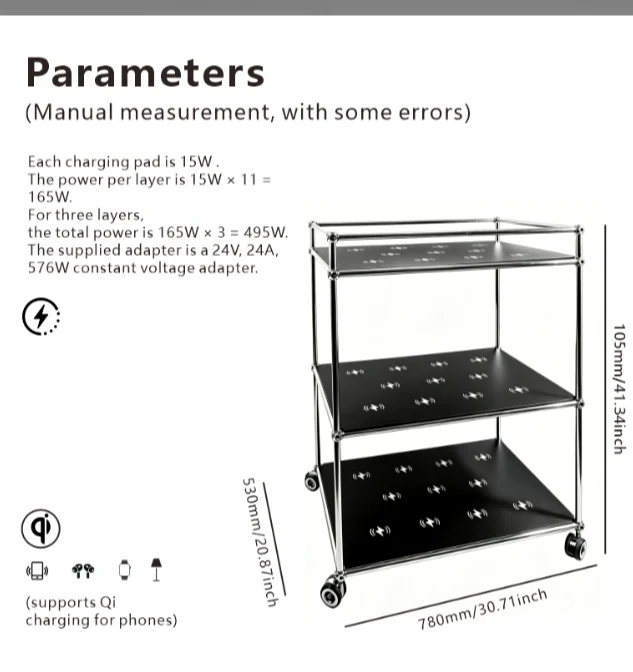
Values below come from the supplied parameter graphic. They are reference data for this photographed configuration and must be confirmed on the approved drawing and production-representative sample.

Reference dimensions and charging parameters for the three-tier lamp trolley
System typeThree-tier mobile lamp charging trolley
Reference size780 W × 530 D × 1050 H mm
Charging layout11 positions per powered shelf × 3 shelves
Per-position reference15 W
Per-shelf reference165 W
Three-shelf reference load495 W
Supplied adapter reference24 V · 24 A · 576 W constant voltage
Phone chargingSelected Qi configuration shown

Height is shown as 41.34 inches in the source graphic, which converts to approximately 1050 mm; the “105 mm” label in that graphic is treated as a typographical error. Manual measurement may vary. Final power architecture, plug, cable, lamp compatibility, heat performance and destination-market documentation require project approval.
Where the design fits best

Four hospitality environments.

The open metal frame and disciplined grid work best in modern, design-led interiors. Finish, storage visibility and back-of-house placement should be reviewed against each venue concept.

01

Modern French, Italian & chef-led restaurants

Pairs naturally with stone, concrete, dark timber and restrained contemporary interiors. The trolley can stay operationally discreet while the organized lamp fleet reads as part of the venue’s design language.

02

Business dining & executive lounges

Supports disciplined service in venues where guests expect reliable device access and uncluttered tables. Mobile deployment helps teams prepare lamps or selected Qi phone-charging positions before peak service.

03

Independent specialty cafés

Works with industrial, microcement and metal-led interiors. A compact fleet station can serve laptop-working guests while helping staff keep charging equipment organized between seating zones.

04

Private dining & fine dining

Keeps lamp charging and storage in one controlled service unit. For guest-facing use, cable routing and accessory storage should be planned so the trolley arrives clean, quiet and visually composed.

Buyer approval gate

Approve the lamp and trolley as one system.

The photographed trolley demonstrates the physical concept. A commercial order should lock the exact lamp model, base alignment, electrical interface, simultaneous-load test, cable routing, caster behavior and destination-market documentation.

Exact lamp model, base size and charging alignment
Adapter input, destination plug and cable routing
All-position charging and temperature observation
Shelf labels, inventory numbering and staff workflow
Trolley drawing, finish sample and caster performance
Packaging, battery documents and shipment plan

Buyer FAQ

Questions to settle before quotation.

How many lamps can the reference trolley charge?

The supplied parameter graphic shows 11 charging positions on each of three powered shelves, for a 33-position reference layout. Final compatibility and simultaneous-load behavior must be confirmed with the selected lamp and approved sample.

Can it charge phones as well as lamps?

The reference image shows selected Qi phone charging. Phone compatibility is configuration-specific and must be confirmed before quotation.

Is the trolley ready for every cordless lamp model?

No. Base geometry, charging position, electrical input and alignment must be matched to the exact lamp model.

Are the dimensions final?

The reference size is approximately 780 × 530 × 1050 mm and is based on manual measurement. The approved drawing and sample control the final order.

Can the shelf layout or finish be customized?

Project adaptations can be reviewed after the required lamp quantity, lamp model, destination, deployment route and storage needs are defined. Feasibility, cost and minimum quantity depend on the requested change.

Send the floor plan. We’ll map the charging routine.

Share your venue type, lamp model, estimated quantity, destination market, service schedule, required delivery date and preferred finish. Jian Bian will confirm a configuration and sample-validation route.

Start a trolley inquiry →
Follow Jian Bian