
A rechargeable table lamp can look excellent in a product photo and still disappoint once a buyer handles the sample. For an Amazon private-label launch, a boutique hotel pilot, or a small independent-store collection, the smartest first step is to inspect the exact model in realistic settings. This guide uses real photographs of JianBian’s JB-469 white mini table lamp and turns them into six practical sample checks.
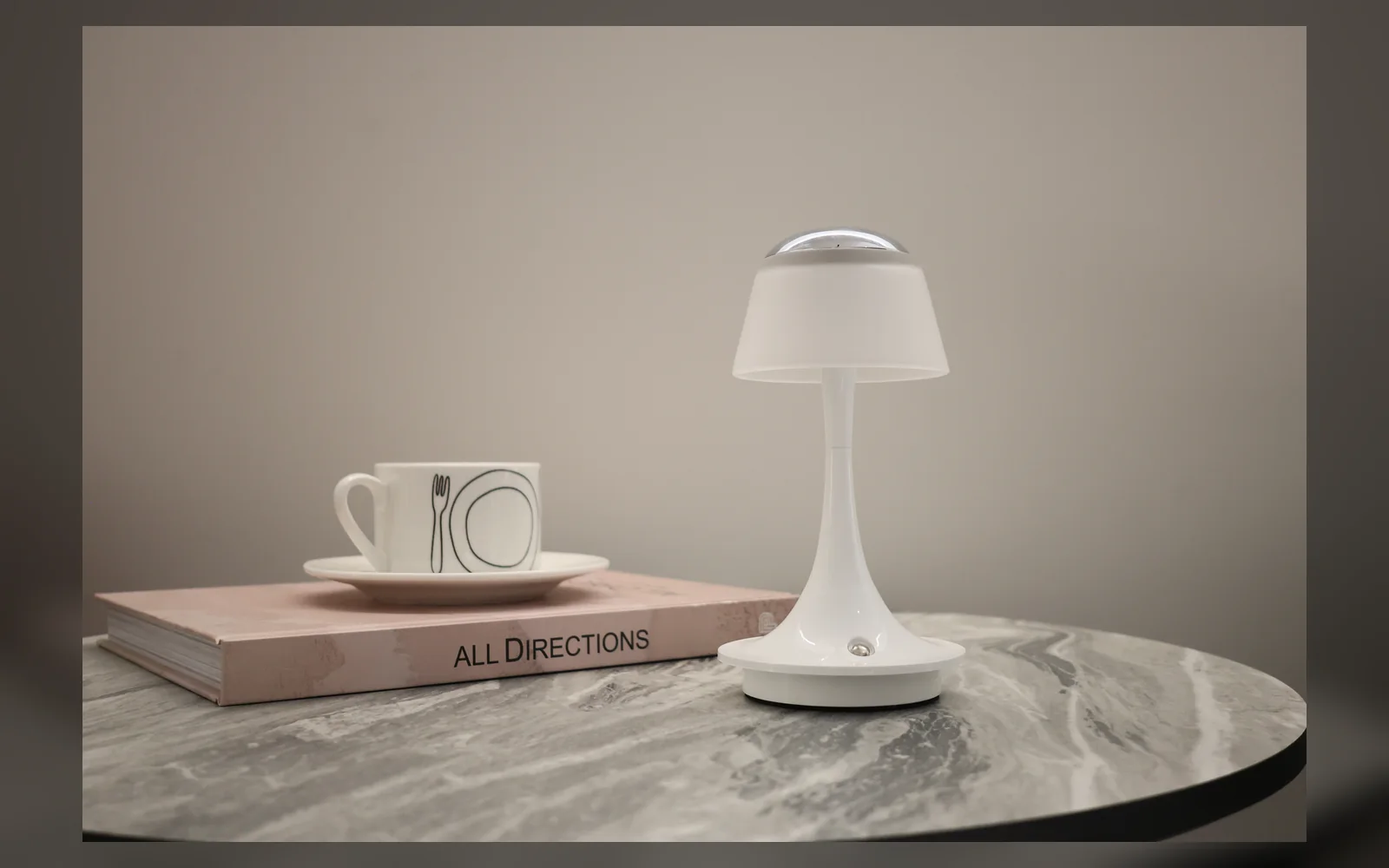
Start with the actual sample, not a generic promise
The current JB-469 product record describes a compact rechargeable table lamp with a glass diffuser element, an approximately 90 mm diameter base and 195 mm overall height, and a 1,200 mAh battery. The recorded individual color-box size is 95 × 95 × 215 mm. These are model-specific reference values for sampling; confirm the final production drawing, battery marking, and retail pack before using them in a customer listing. We have intentionally left out unverified runtime, power, protection ratings, certifications, warranty, and shipping terms.
The photos below are of the physical lamp, not AI lifestyle renderings. They help a buyer judge shape, light appearance, base details, and placement. A photograph cannot replace a sample test or a compliance document.
1. Look at the light when the diffuser is on
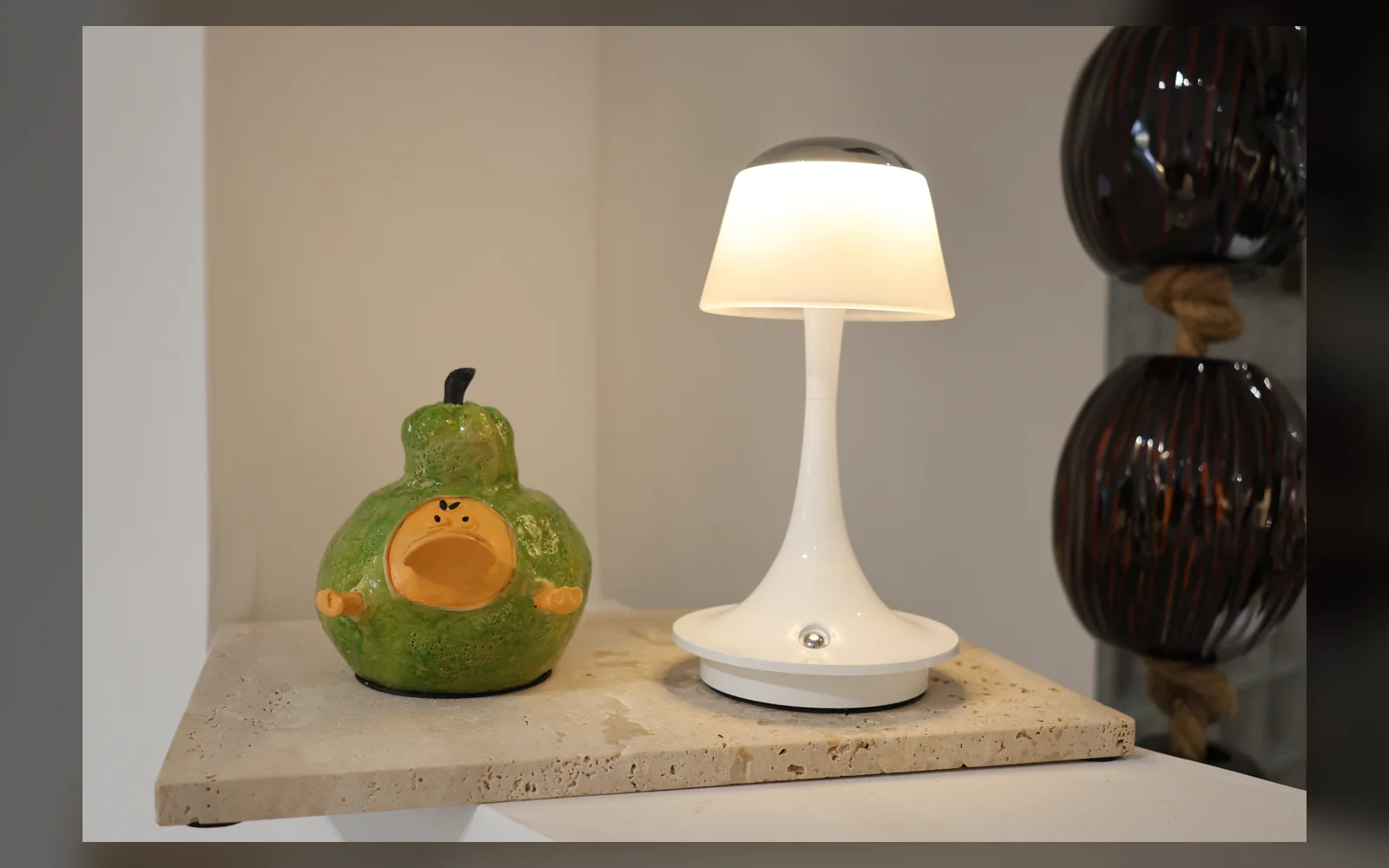
Switch the exact sample on in a dim room, then look from seated and standing positions. Is the shade evenly illuminated? Can a guest see a harsh LED point from normal viewing angles? Does the tabletop receive enough useful light for the intended purpose? The warm-light appearance in our photographs is a visual reference, not a calibrated color-temperature or brightness measurement. Ask for a measurement report if your listing needs a numeric claim.

2. Check the physical controls and charging access
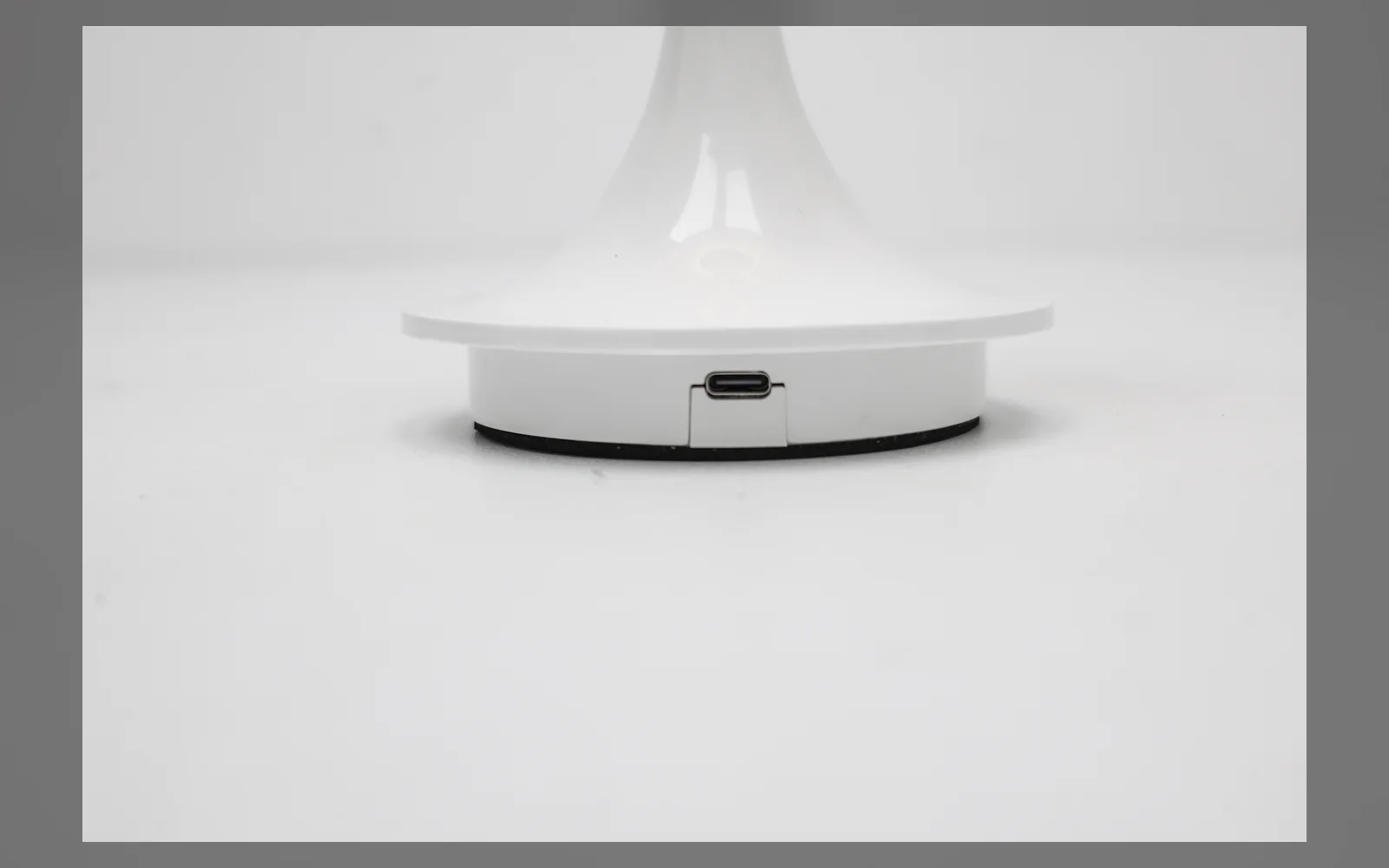
Operate the sample yourself. Confirm the control location, the feedback after each press, and whether the same behavior appears on more than one sample. Inspect the charging port and cable fit without forcing the connector. Our close-up shows the port on this photographed unit; the final manual should match the delivered version exactly. Do not copy charging, dimming, or color-mode claims from another model. A buyer-facing instruction should say only what has been demonstrated on the approved sample.
3. Test stability and surface contact
Place the lamp on a level bedside table, narrow shelf, and serving tray. Gently operate the control and move the table as an ordinary user would. Check whether the base rocks, slides, or marks the surface. The underside photograph makes the contact area easy to inspect, but stability still needs a hands-on test. For hospitality projects, have the property team assess placement and cleaning routines before ordering. For online retail, use photographs that accurately show the lamp’s scale next to familiar objects.

4. Photograph the real use case
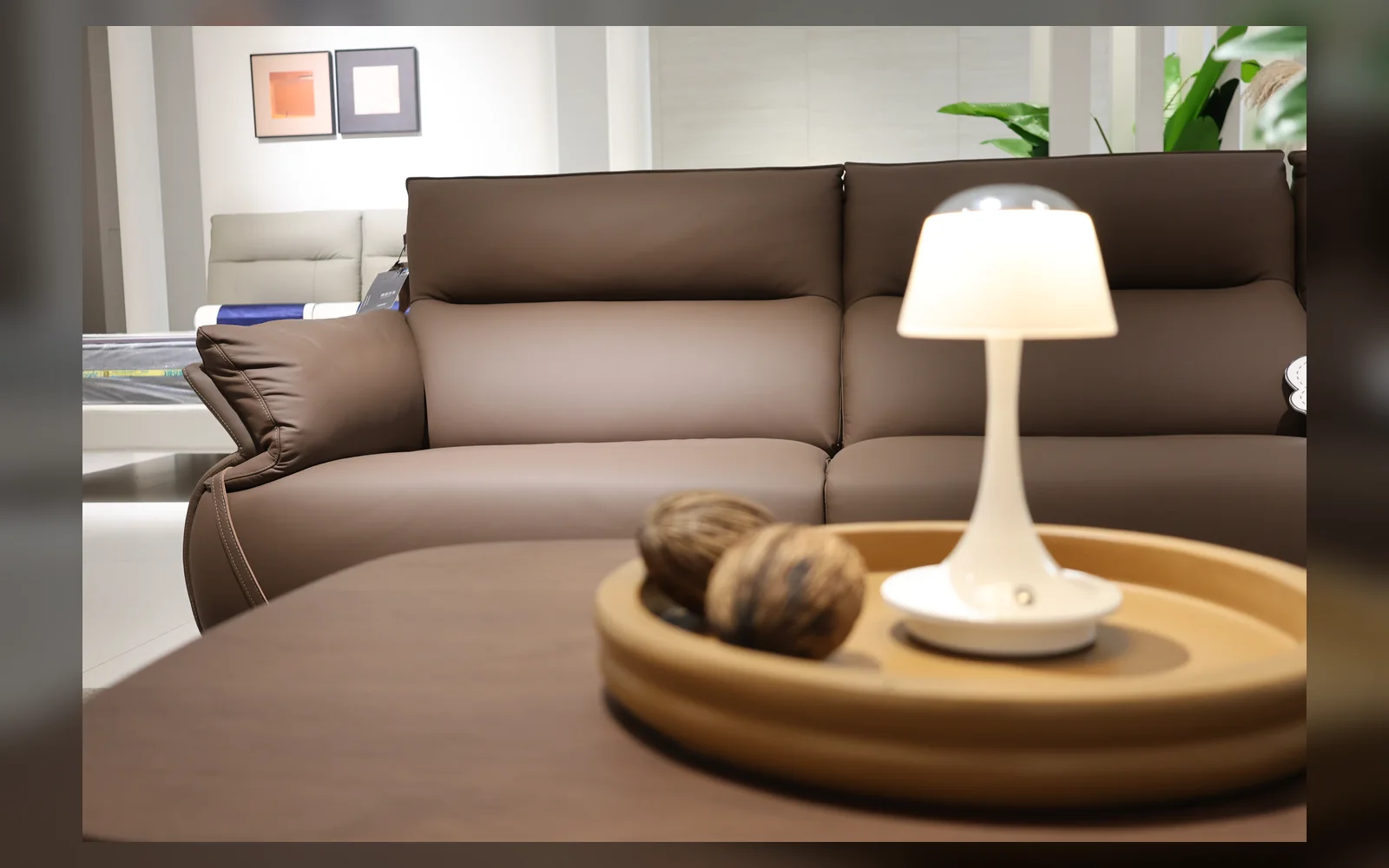
A buyer may picture this silhouette on a hotel nightstand, a restaurant side table, or a living-room accent tray. The real photographs show how the compact white form reads beside furniture. They do not establish approval for outdoor use, food-service conditions, or any particular environment. Build the listing around the use case you have actually tested, and keep lifestyle storytelling separate from technical proof. A concise video of a person switching the lamp on and moving it between indoor settings often answers more buyer questions than a long feature list.
5. Make packaging and instructions match the unit
Before approving an Amazon or independent-site launch, request the exact sample pack. Compare the lamp, charging accessory, label, and printed manual line by line. Check that the retailer-facing dimensions and battery information agree with the approved bill of materials and final artwork. A glass element deserves careful cushioning and a documented transit-test plan, but we are not claiming that a particular drop-test result has already been achieved. The 95 × 95 × 215 mm color-box record is a useful starting point, not permission to publish final carton or logistics specifications without checking the production pack.
6. Separate verified facts from future options
Private-label teams often ask about finishes, branding, packaging artwork, or channel-specific inserts. Those can be discussed as project options, but the first listing should describe the exact unit that was sampled and approved. Keep a simple evidence file with the sample photos, revision date, measured specification sheet, manual proof, and any test reports. If a component, control board, battery, or packaging changes, review the copy again. This protects both the buyer’s brand and the end customer’s expectations.
Watch the 64-second sample guide
See the real lamp, lighted diffuser, base, and charging-port close-ups in the companion video. The video is a buyer checklist, not a certification or laboratory demonstration.
Frequently asked questions
Is JB-469 the same as a plug-in fabric-shade lamp?
No. JB-469 is the rechargeable mini lamp pictured here. A plug-in fabric-shade model has a different power architecture and must be described from its own exact-model evidence.
Can we publish battery runtime or a safety certificate from these photos?
No. A photo can show the product and its use, but runtime, electrical ratings, and certifications require documentation for the approved model and market version. Request those records before making public claims.
What should an Amazon seller request before ordering packaging?
Ask for the approved sample, final dimensions and accessory list, label artwork, manual proof, battery and transport documentation where applicable, and a packaging protection plan. Match all copy and imagery to that revision.
For another portable-lamp sampling framework, see our JB-468 private-label sample checklist. Browse more practical product stories on the JianBian Blog.
Planning a U.S. private-label or hospitality sample review? Contact JianBian Lighting with your target channel, quantity range, and required documents. We will confirm the current JB-469 revision and provide model-specific information for your evaluation.