
A table lamp does not need a new electrical design for every audience. Keep the cord, inline switch, base, E26 socket and approved LED bulb consistent—then use the fabric shade to create collections for different people, rooms, seasons, cultures and moods.
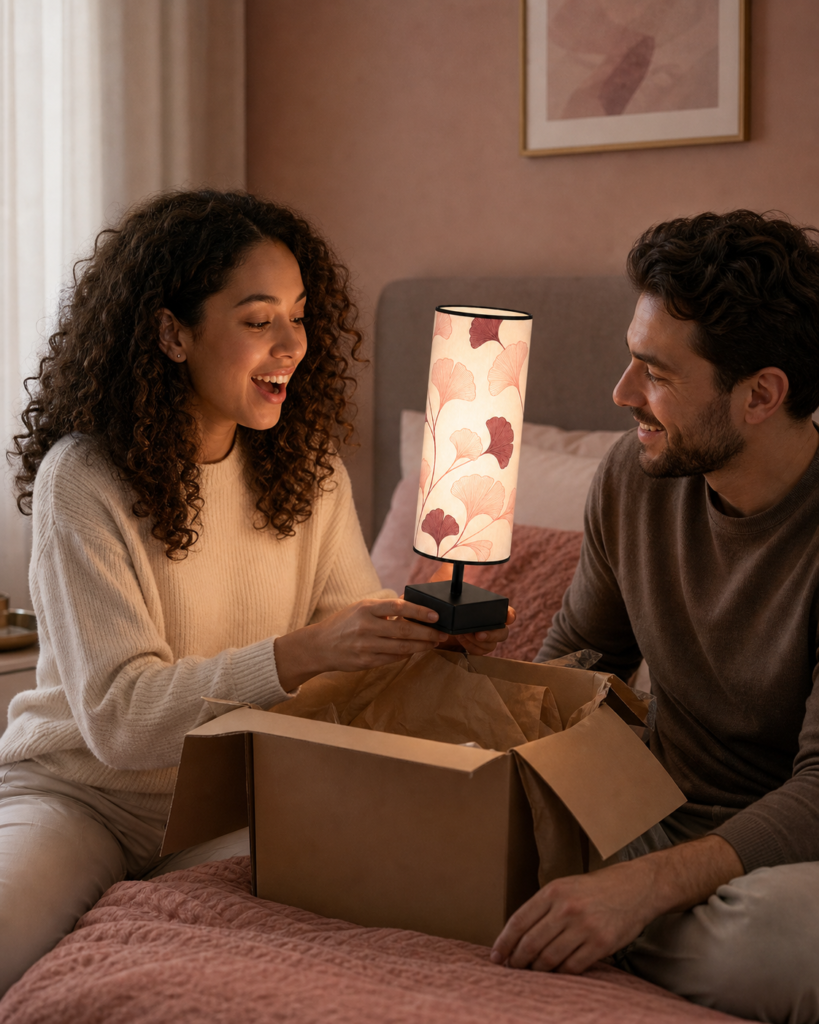
Watch: one lamp platform, many shade stories
For an Amazon seller or a U.S. direct-to-consumer lighting brand, this is a platform strategy. Shared electrical parts can reduce repeated sampling work and make inventory planning easier. The shade becomes the fast-changing layer: floral for a cottage bedroom, geometric for a home office, playful art for a nursery, refined neutrals for hospitality, or a seasonal print for a gifting campaign.
The lamp’s working principle—in beginner language
Simple power path
Wall outlet → power cord → inline switch → E26 socket → LED bulb
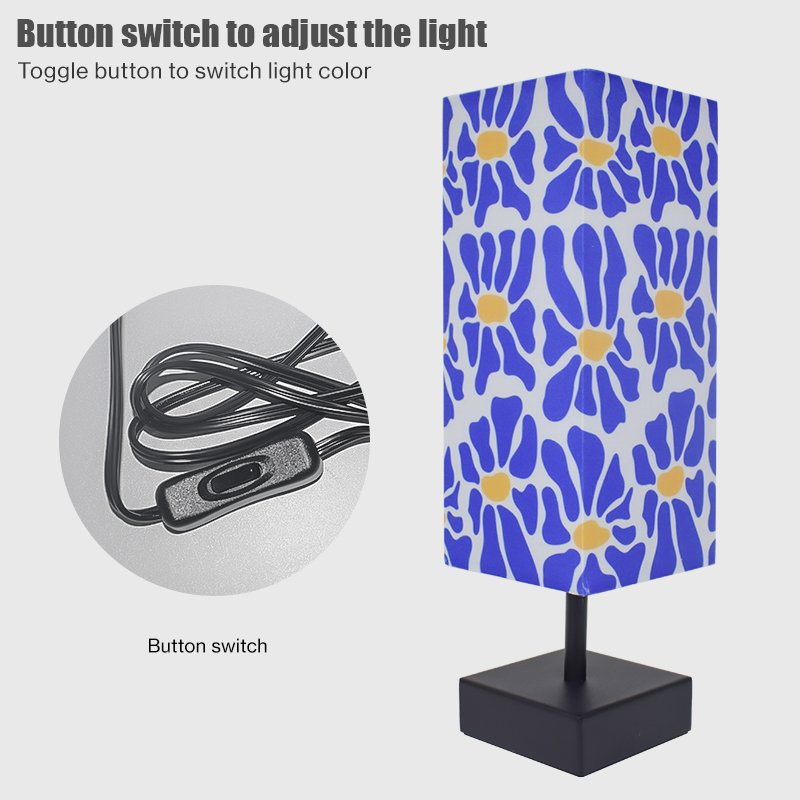
The cord carries electricity from the wall. The inline switch opens or closes the circuit. When the circuit is closed, power reaches the E26 socket and then the LED bulb. The lamp base and shade do not “create” the light; they hold, direct and visually shape it.
What does the PCB inside an LED bulb do?
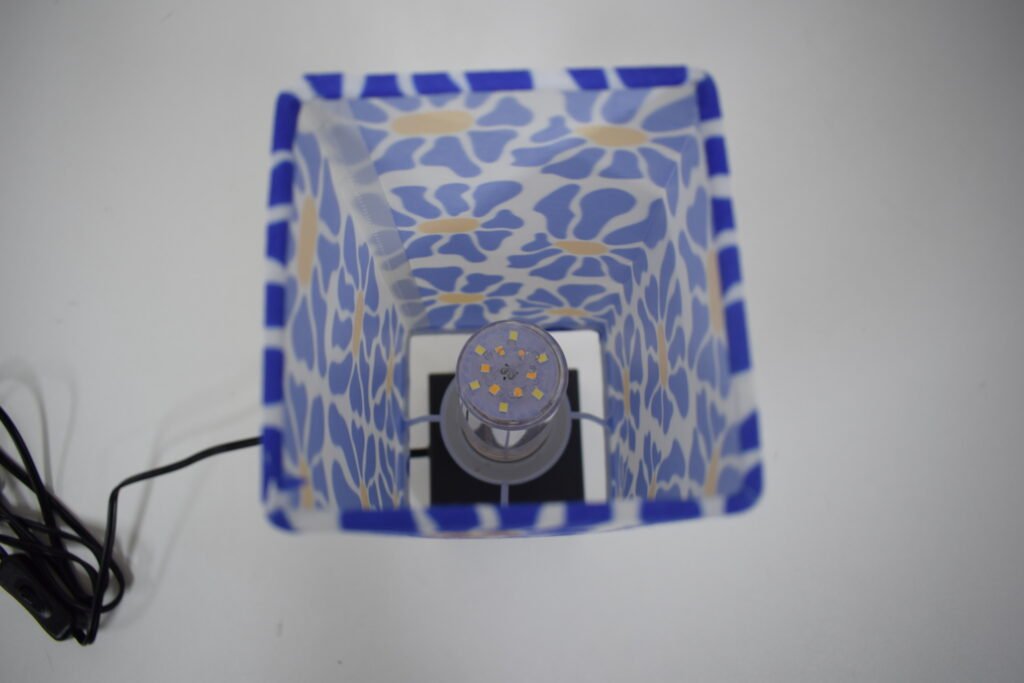
PCB means printed circuit board. The electricity from a U.S. outlet is alternating current, or AC. LEDs need controlled direct current, or DC. Inside a typical LED bulb, a small driver circuit on the PCB converts and regulates the incoming power so the LEDs receive usable current. The LEDs then convert that electrical energy into light.
For a three-color-temperature lamp, the approved bulb and control logic switch among warm, neutral and white light channels. This is color-temperature switching, not necessarily brightness dimming. A final product claim must always match the approved bulb, driver, switch logic, label and test report for that exact model.
What stays the same—and what can change
| Reusable core | Flexible brand layer |
|---|---|
| US plug and power cord | Shade shape and proportion |
| Inline switch architecture | Fabric color, print and texture |
| Metal base and E26 socket | Audience, room and use scene |
| Approved bulb and driver PCB | Culture, season, hobby and mood |
| Safety and quality-control package | Brand graphics, color box and listing story |
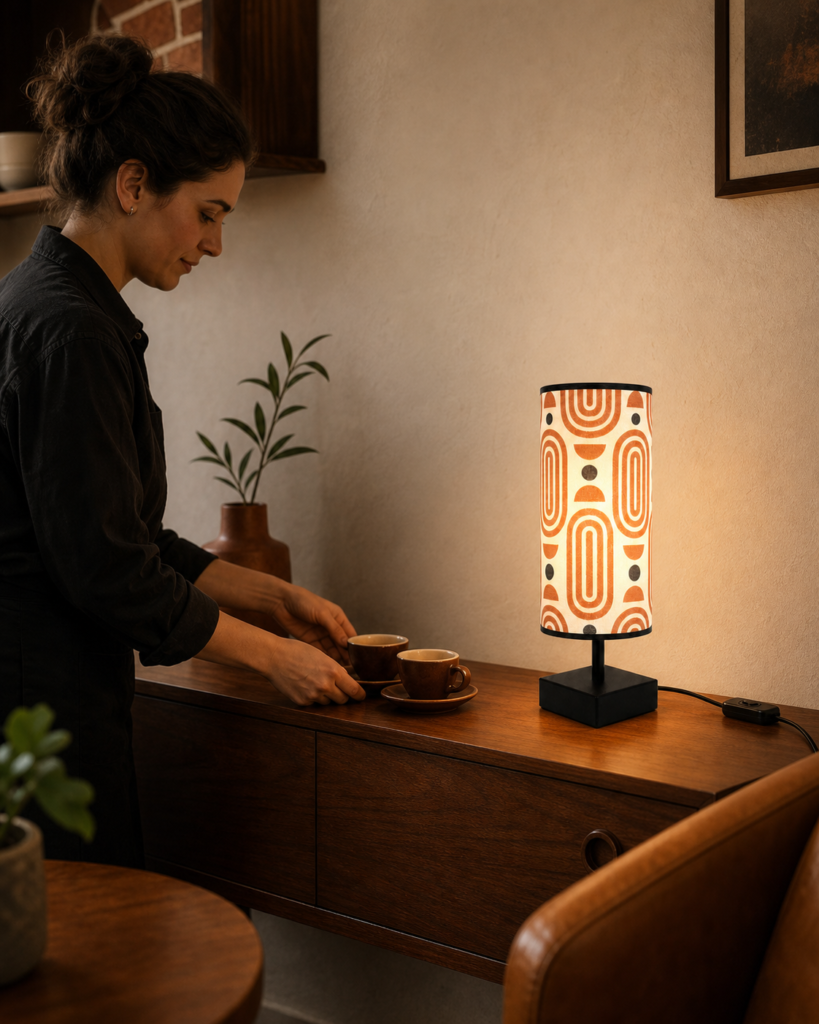
This separation is powerful for B2B product development. Instead of treating every new aesthetic as a completely new lamp, a brand can build a collection calendar around a validated core. New shade artwork can address a new customer segment while the engineering team protects the parts that already work.
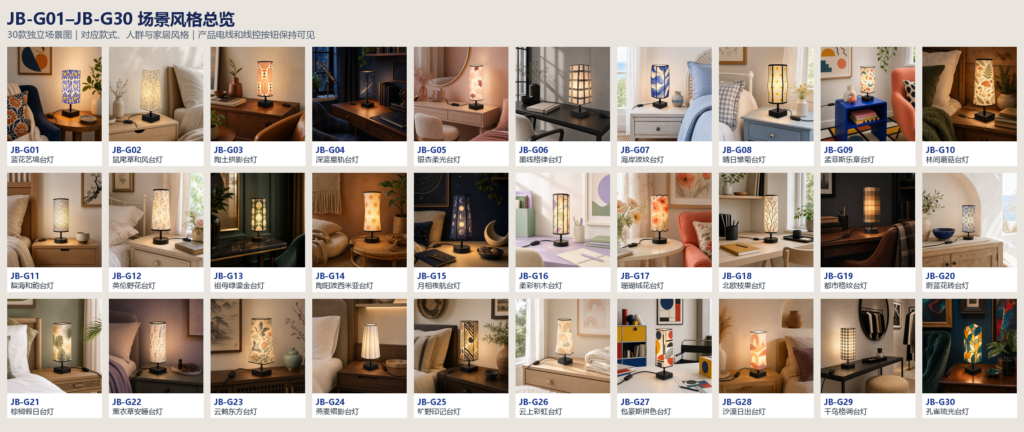
Design for people, not just rooms
- Nursery and family gifting: gentle colors, friendly themes and clear safety communication.
- Home office and creative work: modern graphics that give a desk or reading corner a distinct identity.
- Boutique hotel, Airbnb and guest room: coordinated prints that support the property story.
- Fashion, beauty and lifestyle retail: bold patterns that behave like a decorative accessory.
- Cultural and seasonal collections: artwork developed with appropriate review for symbols, holidays and local expectations.
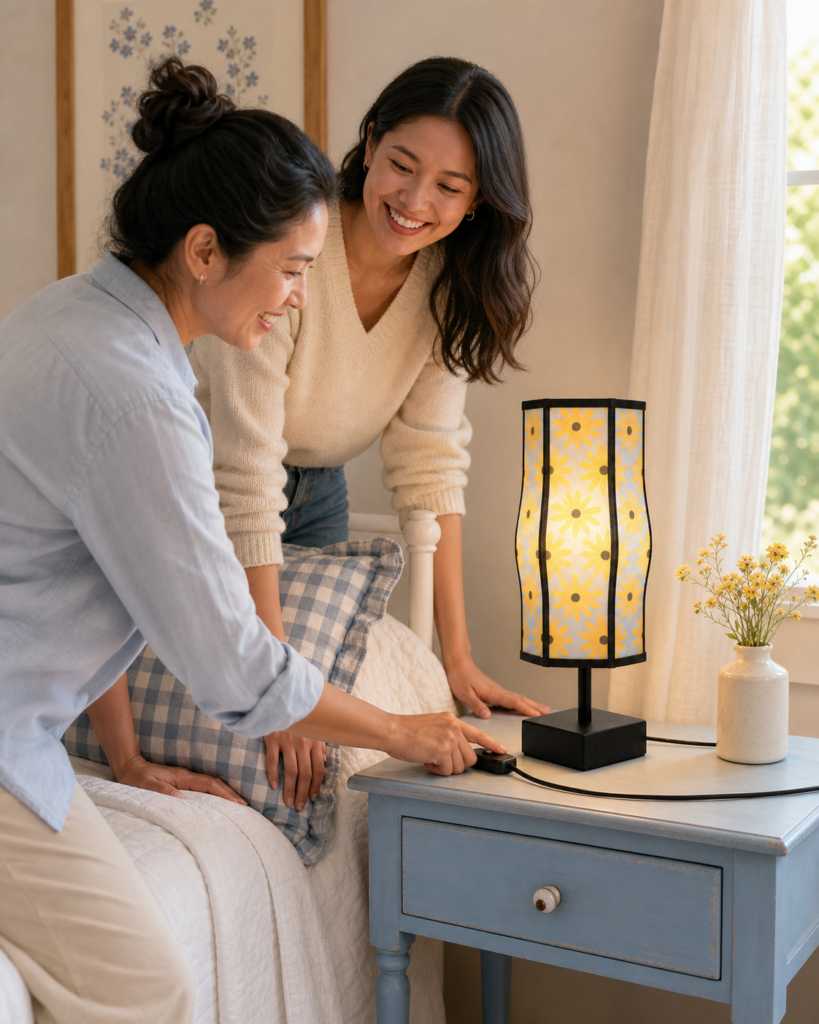
Amazon-ready packaging: protect first, sell second
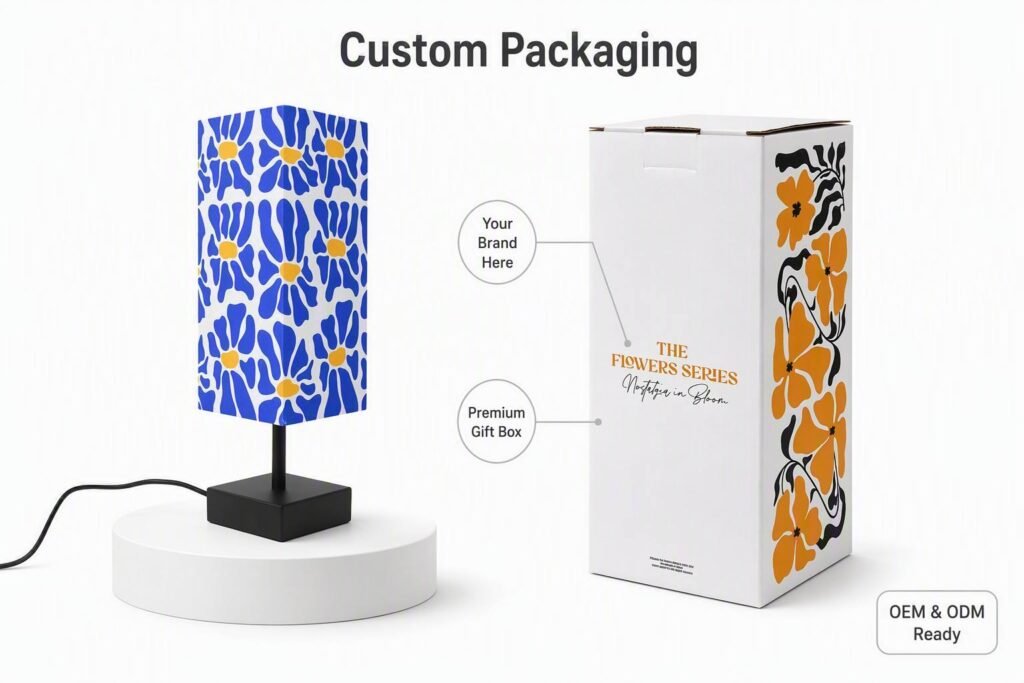
- Prevent shade crushing. Use the correct internal clearance and support so the fabric and frame arrive without dents or distortion.
- Separate and secure components. Keep the metal base, shade and cord from rubbing or striking one another in transit.
- Match the product label. Model, voltage range, plug type, power and color-temperature claims must agree with the final approved sample and BOM.
- Reserve a clean barcode zone. Plan UPC and, where required, Amazon FNSKU placement on a flat, scannable surface.
- Use honest compliance graphics. Never print a certification mark, warranty term or performance claim until it is approved for that exact product and market.
- Test the pack. Confirm the final packed dimensions and weight, then perform the agreed transport and drop-test program before creating the Amazon listing.
What a useful U.S. instruction manual should contain
An Amazon manual is not a generic decoration. It is model-controlled product content. The manual should help a first-time customer set up the lamp without guessing and should use the same terms shown on the box and listing.
- Product name, model number and a clear parts diagram
- Assembly steps performed with the lamp unplugged
- The correct E26 bulb installation and replacement method
- Accurate inline-switch and three-CCT operating instructions
- Indoor dry-location, cord and cleaning precautions
- Short troubleshooting steps for no light or unexpected color cycling
- Manufacturer or responsible-party contact information
- Only approved warranty, compliance and disposal statements
Before printing, compare the manual against the approved BOM, label, color box, sample and test reports. A mismatch—such as a different voltage range, switch type or warranty statement—creates customer confusion and unnecessary compliance risk.
Confirmed JB-G1 platform reference specifications
| Rated power | 9 W |
| Rated input | AC 100–265 V, 50/60 Hz |
| Color temperatures | 3000 K / 4000 K / 6000 K |
| Control | Inline push-button, 3-CCT cycle |
| Lamp holder | Replaceable E26 platform |
| Plug and cord | US 2-prong plug, black 1500 mm cord |
| Overall size | Approximately 103 × 103 × 336 mm |
| Shade size | Approximately 103 × 103 × 236 mm |
| Single color box | Approximately 120 × 120 × 350 mm |
| Construction | Printed fabric shade and iron base; indoor dry use |
These are reference specifications for the confirmed JB-G1 base platform. Final shade construction, artwork, bulb, plug, packaging, compliance scope and commercial terms must be checked against the approved sample for each private-label program.
Build a collection, not a one-off SKU
If you are planning a fabric shade table lamp line for Amazon or a U.S. independent store, start with three decisions: the target person, the target scene and the emotion the shade should create. Jian Bian Lighting can then review the reusable electrical platform, shade artwork, color-box direction and model-specific documentation as one coordinated OEM/ODM program.